Creating an immersive irradiated world where props, systems, and player behaviour reinforce the setting

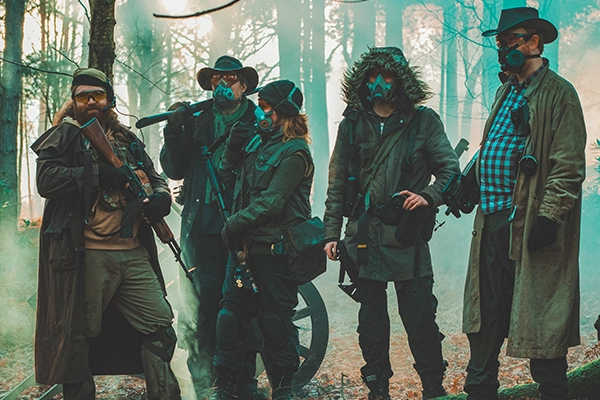
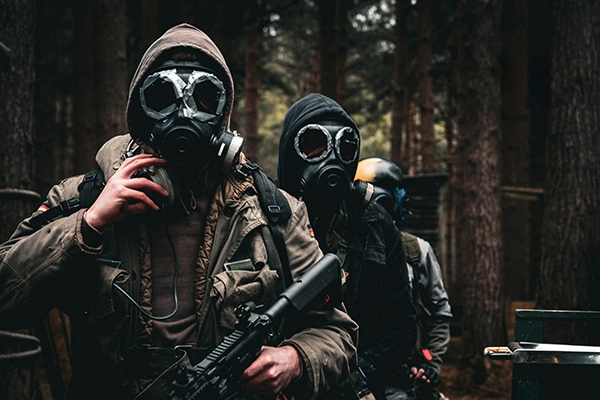
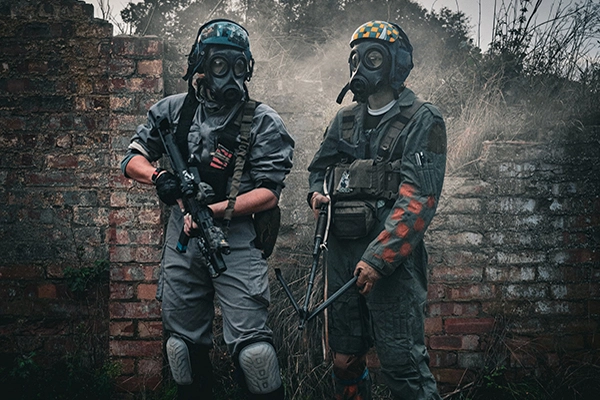
StALkErS is an immersive airsoft game inspired by the computer games and books Metro 20233, Fallout and S.T.A.L.K.E.R. Stalker teams working from a central hub, to try and gather supplies and resources for their faction settlements.
The need to Survive is so crucial, it means these Stalker teams have no loyalty to each other when outside of the 'Safe Zone'.
The aim of the game is be become the most famous, successful and renowned Stalker team in the wasteland, for only through memory can a Stalker reach immortality.
At a basic level, the game revolves around exploration, survival, and interaction with other players. Players move through radiated and non-radiated areas, encounter environmental hazards, and make decisions about risk versus reward.
Combat exists, but it is not the primary driver. Ammunition and time are limited. Injury and radiation exposure discourage constant fighting and reward cautious movement and planning.
The game does not push players toward a single objective. Instead, it provides tools and systems that allow different approaches. Some players takes high risk for high rewards. Others scavenge. Some focus on jobs and tasks.
Progress in StAlkErS is not measured by kills or wealth. Teams who earn enough currency to purchase "chits" and then deposit them at settlements. The more chit deposited at settlements increases your fame. The team who has deposited the most Chits wins and get all the glory (and bragging rights)
There is a fine balance between buying things you need to survive in the wasteland such as airfilters and ammunition, and investing in chits to secure settlement favour. Charging into dangerous areas without preparation usually ends badly. Players who plan tend to do better.
StAlkErS uses a mix of functional props and set dressing. Not every prop affects gameplay directly. Some exist purely to establish tone such as the jukebox. Others exist to enforce mechanics.
The important distinction is that major systems are always represented physically. Radiation, injury, treatment, and information flow are not abstract concepts. They are tied to objects players must carry, operate, or visit.
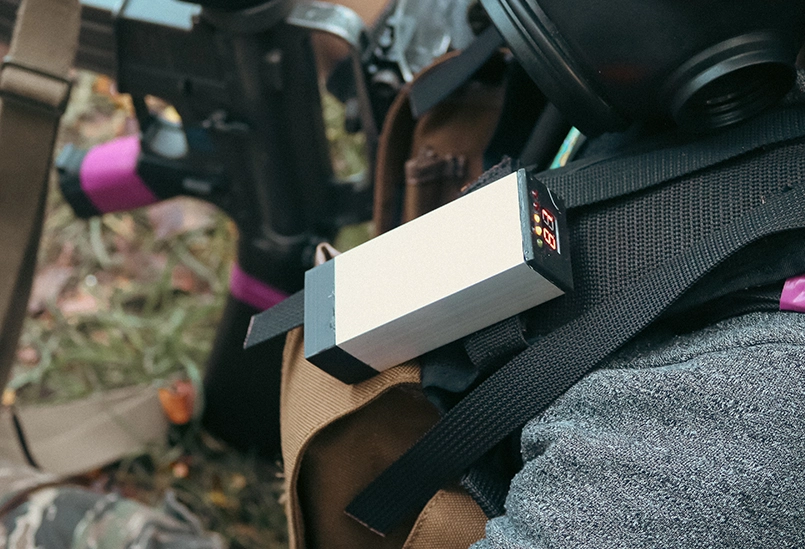
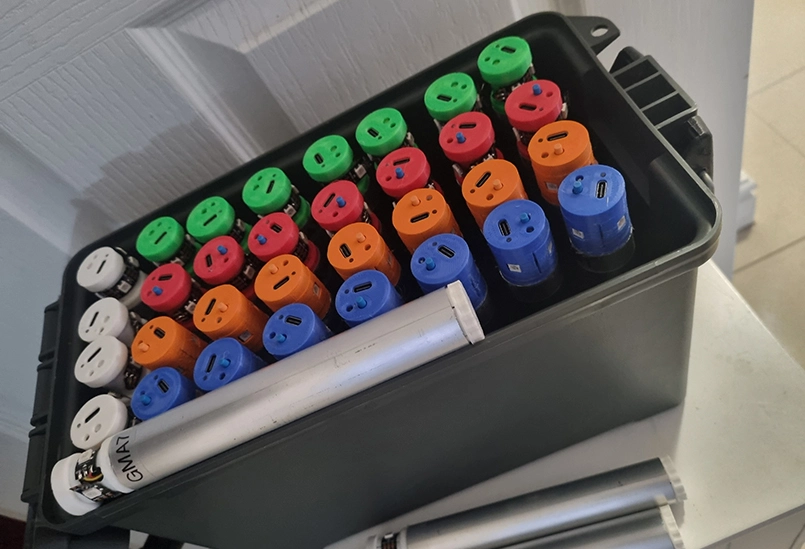
Radiation is represented through personal dosimeters and rad sticks. Dosimeters track cumulative exposure over time. Rad sticks provide a means of marking out a hazardous areas.
Players cannot ignore radiation without consequence. Exposure builds. Certain areas are more irradiated than others. Players learn which locations are worth the risk and which are not.
The system is intentionally simple. Enter a irradated area at your own peril. But if you do, the rewards might be worth it.
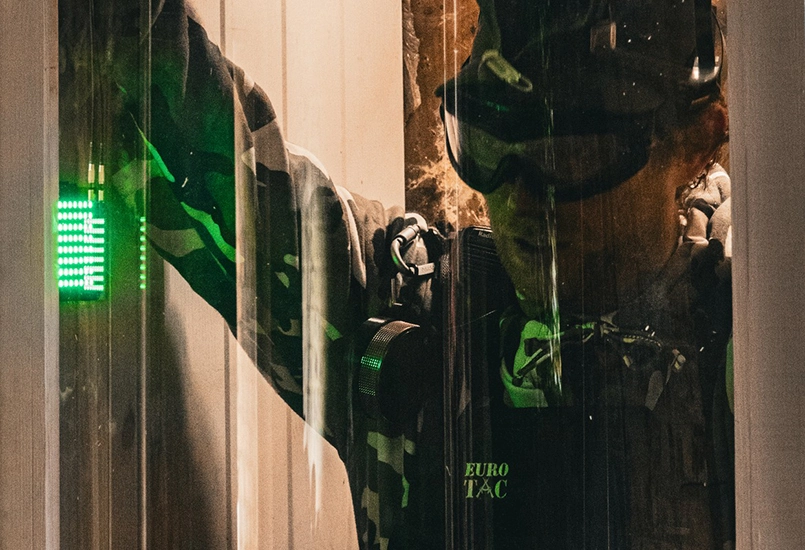
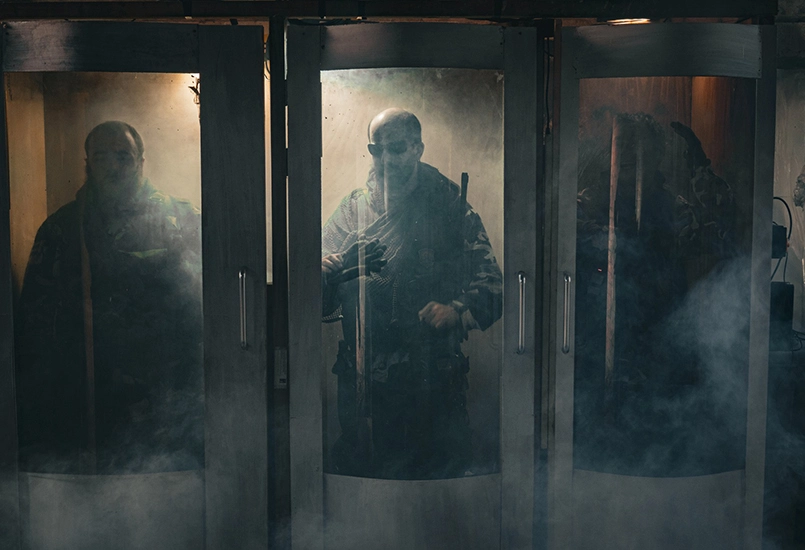
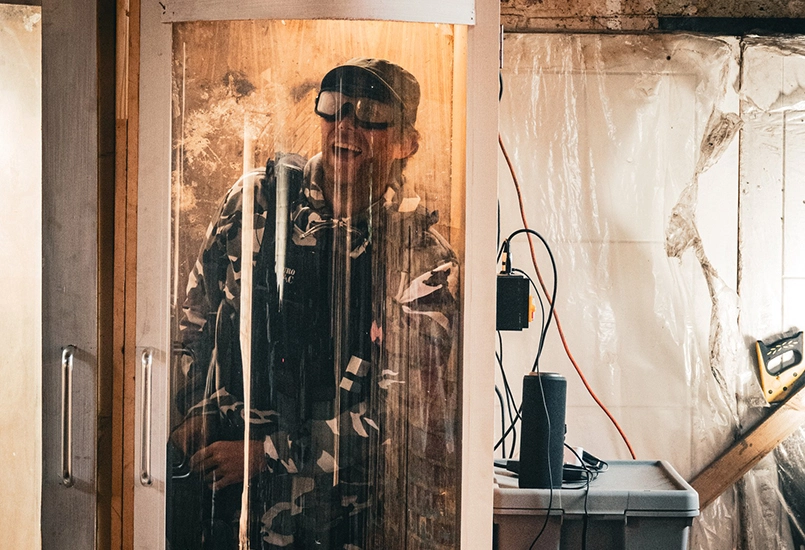
All players are force to go through decontamination as soon as they return from the wasteland. Three players at a time are subjected to the "decontamination proceedure". It only take 30 seconds, fully automated and quite dramatics. If you fail decontamination, then there is a price to pay and a visitor from the doctor to restore you to full health.
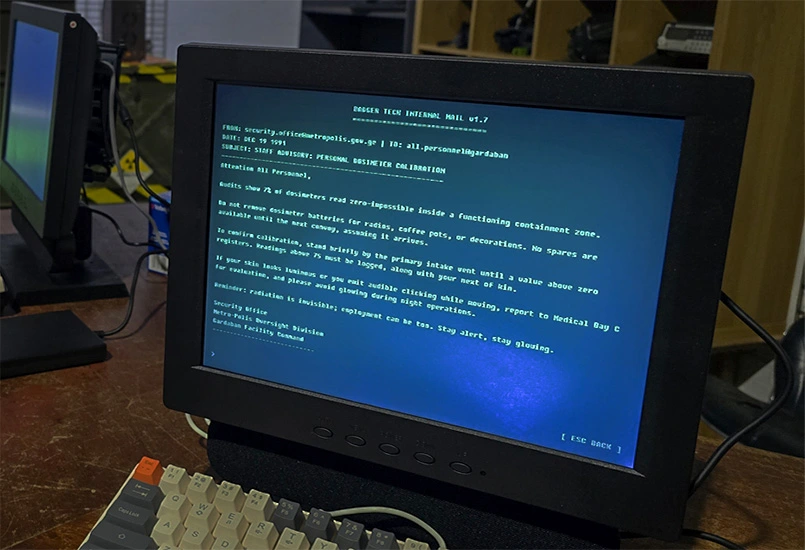
The Fallout terminals are static interactive props used to access story fragments, clues, and world context. Players had to retrieve 3.5" floppy disks from the wasteland and then bring them back to the termninals to find out what secrets they revealed.
Information is partial by design. Terminals provide hints, logs, and background that players must interpret and combine with other sources. Maybe they gave the clue to a safe which contain unimaginable wealth. Maybe audio log from a wastelander describing the location of a sought after artifact.
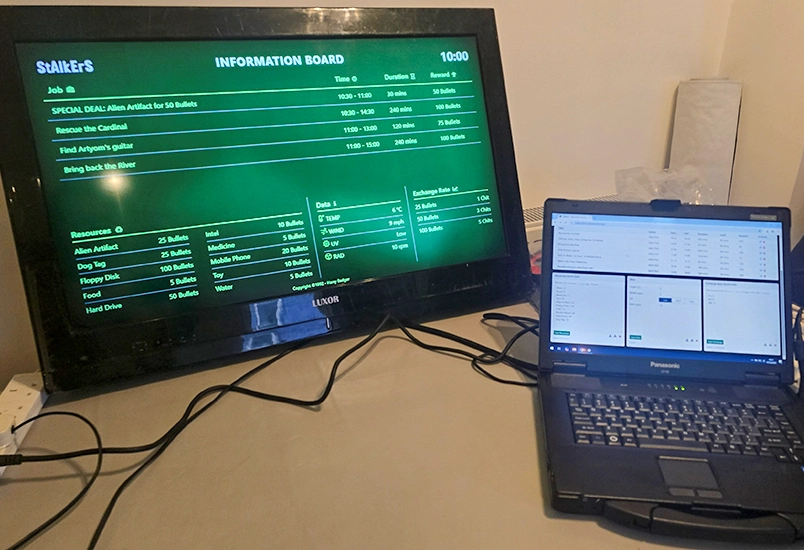
The Information board is the primary place where jobs and tasks are posted. It is intentionally public and central.
This creates a shared reference point. Players see the same information at the same time, but how they act on it differs. Some move immediately. Others wait.
The board encourages congregation without forcing it and becomes a natural meeting point during play.
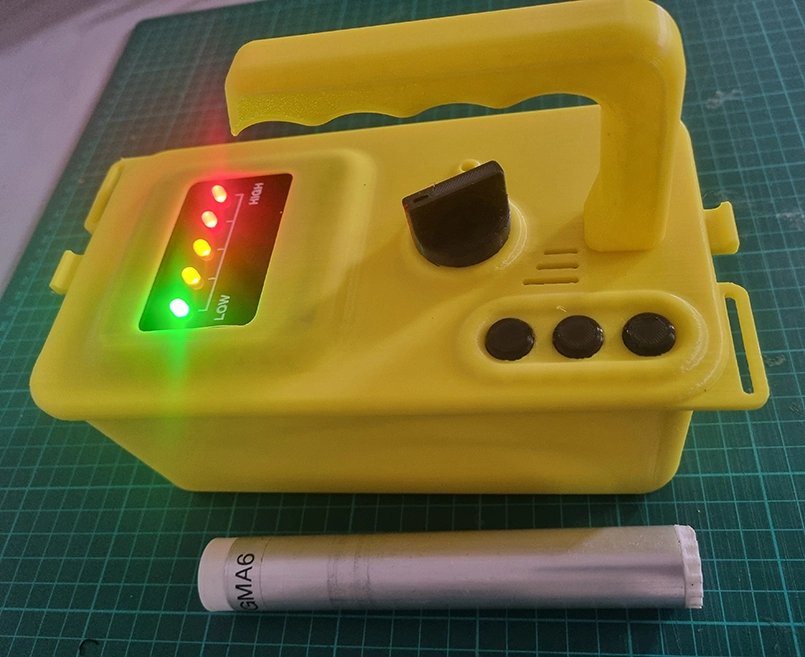
Geiger counters are used for seek-and-find gameplay rather than simple warning devices. The Geigers we tunes to non-lethal gamma waves rather than harmful radiation. Rent a geiger could help you locate and seek out high value items
The audible feedback makes the hunt tactile and engaging.
StAlkErS avoids heavy explanation because explanation breaks immersion. Systems are designed to be discovered through use.
When players are allowed to make mistakes and survive them, the world feels more believable. When props behave consistently, players learn to trust them.
The result is a setting that feels lived in rather than staged. The wasteland does not guide players. It reacts to them. That is enough.