An in game radiation dosimeter detection system for the StAlkErS Filmsim events
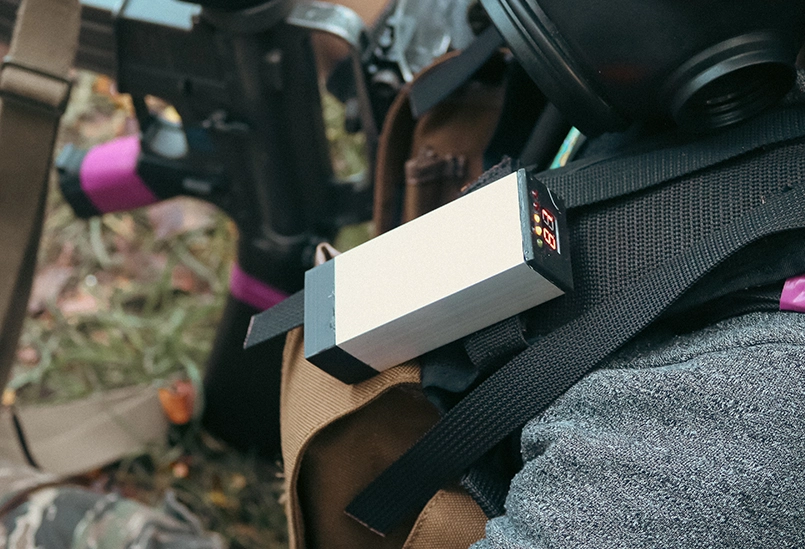
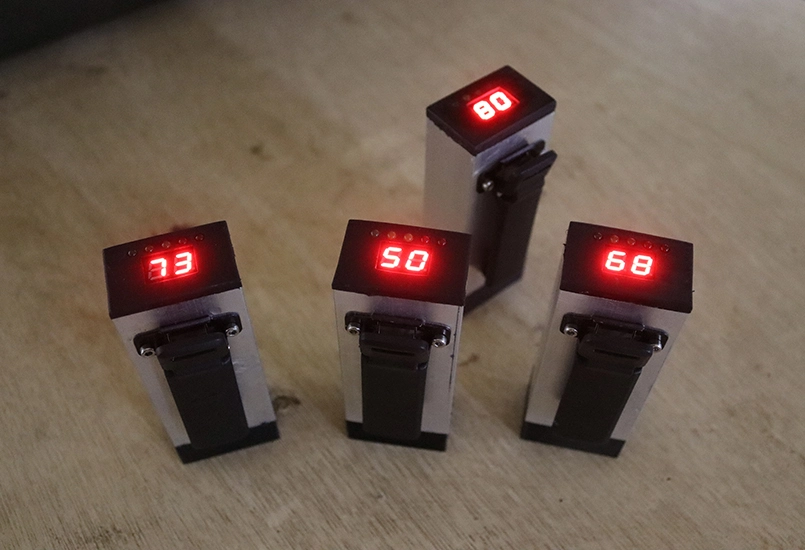
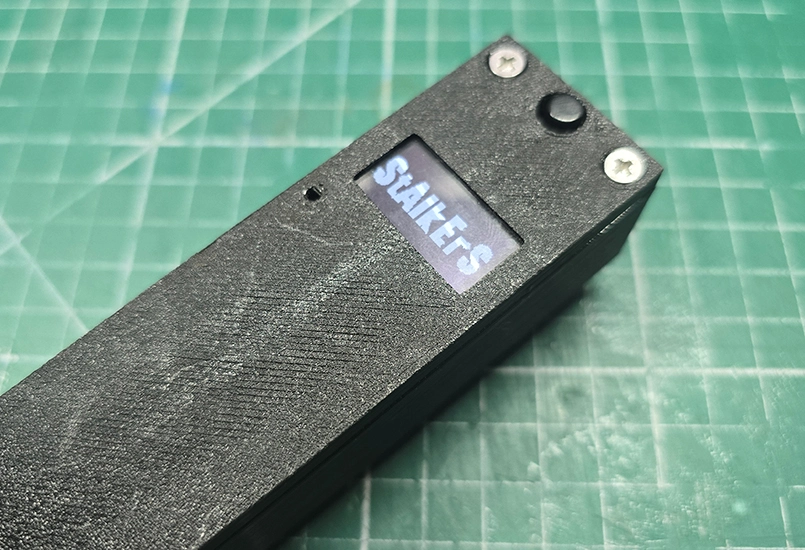
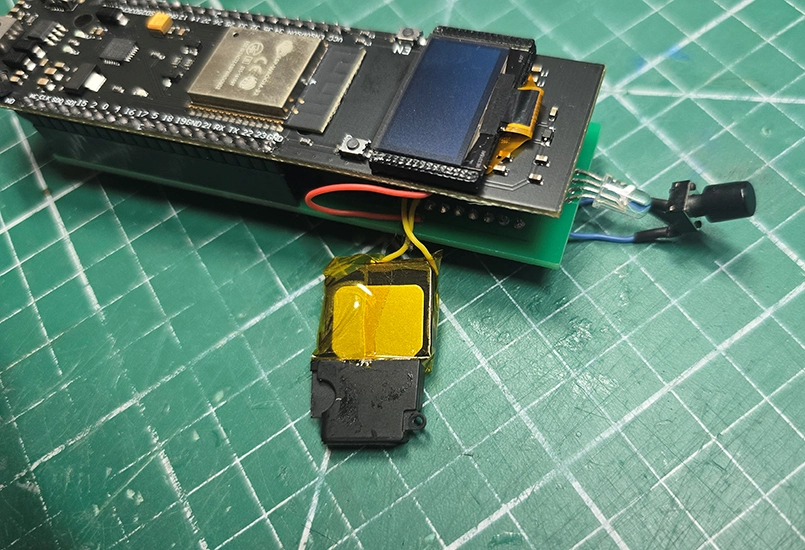
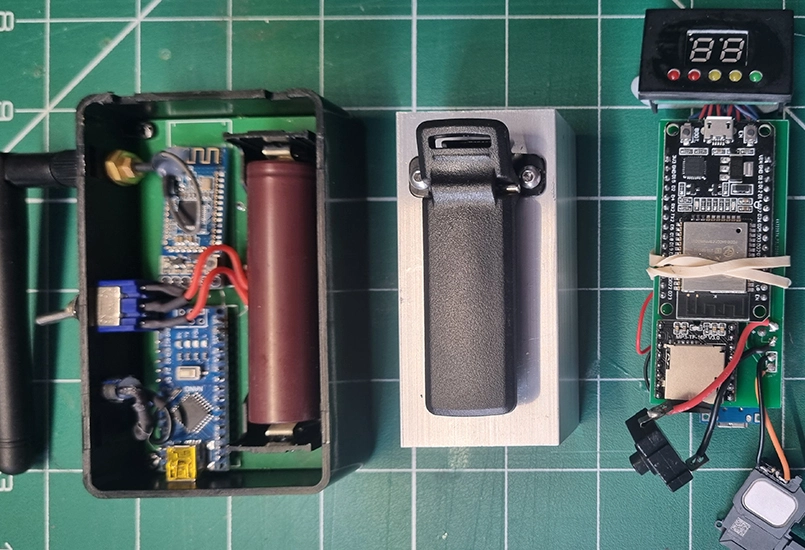
This project didn’t evolve in straight lines. It evolved under pressure. Every major decision was shaped by real players, real terrain, and the hard difference between something that works in theory and something that survives a weekend in mud, rain, smoke, and chaos.
The original challenge was deceptively simple: how do you create hazardous zones in a live game that players actually respect?
Traditional approaches don’t scale well. Paper rules rely on honesty. Marshals can’t be everywhere. Visual markers get ignored once players are under pressure. Radiation needed to behave like a force, not a suggestion.
The goal was not realism for its own sake, but consequence. Players should instinctively feel when they were entering danger, understand that lingering carried risk, and accept that pushing too far would eventually force them out of play. At the same time, organisers needed a system that could shape the battlefield without constant intervention.
One key insight emerged early. Radiation did not need direction or precision. It needed to be proximity-based, persistent, and unavoidable. If the system could reliably answer the question “how close am I to something bad?” and escalate consequences over time, the mechanic would work.
Everything else followed from that decision.
At a technical level, the system is deliberately simple.
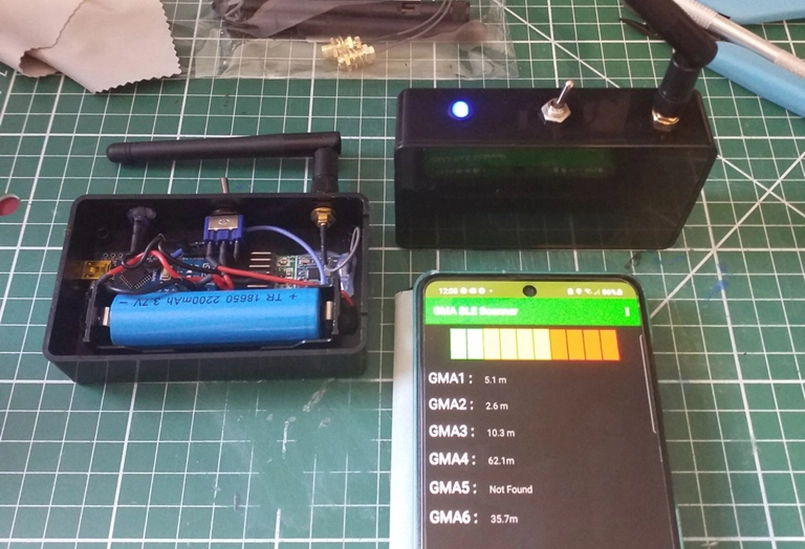
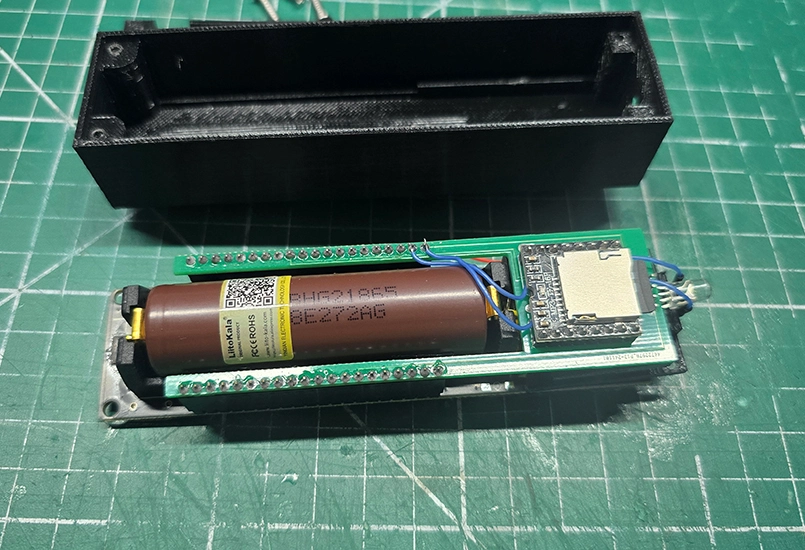
Radiation zones are created using low-power Bluetooth broadcasters hidden around the site. These devices do nothing except continuously broadcast an identifier. Players carry a dosimeter built around an ESP32 microcontroller, which scans for nearby broadcasters every few seconds.
Signal strength becomes the key variable. Stronger signals indicate closer proximity, which translates into faster radiation accumulation. Weaker signals result in slower exposure. Walls, containers, terrain, and distance naturally affect signal strength, meaning the physical environment itself shapes how radiation behaves.
This avoids GPS, maps, or fixed coordinates entirely. Instead of fighting the environment, the system uses it as the balancing factor.
Before committing to physical devices, the radiation mechanic itself needed to be validated.
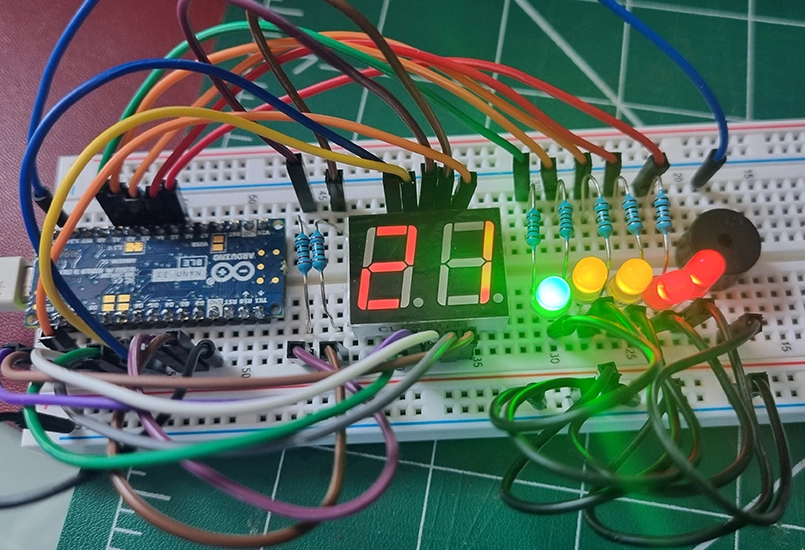
An early proof-of-concept was built to test whether proximity-based radiation accumulation made sense in play. It did. Players immediately understood the rules without explanation. Move closer and radiation increases faster. Stay too long and you die. The cause and effect were intuitive.
What also became clear was what would not survive the field. Phones are fragile. Screens break. Batteries die. Immersion collapses the moment a player is staring at a personal device instead of the world around them. Even when the mechanic worked, the delivery method did not.
This phase succeeded by proving the idea and exposing the limits of software-only solutions. It validated the core mechanic while making one thing obvious: if radiation was going to matter, it had to be embodied in hardware.
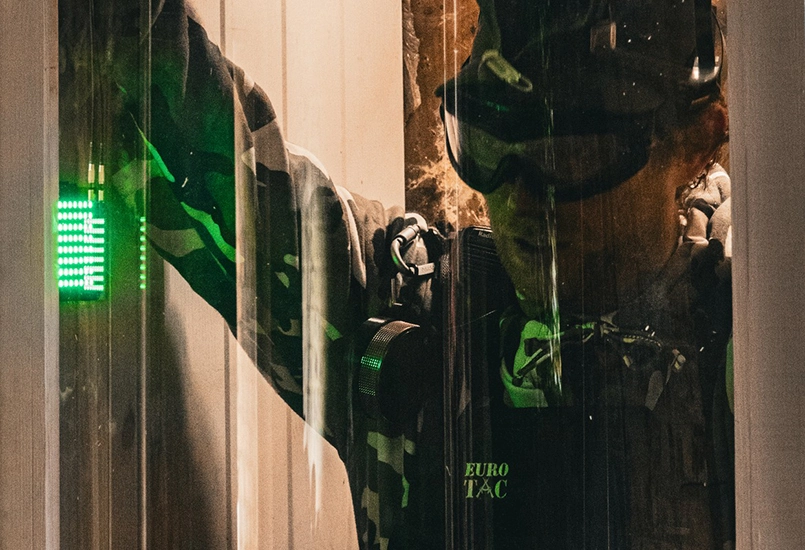
Once the system moved into physical form, radiation stopped being abstract. The dosimeter became an object players wore, listened to, and reacted to. Entering irradiated areas created tension. Staying too long created panic. For the first time, every player carried their own personal indicator of danger.
Mechanically, it worked. Player feedback was overwhelmingly positive.
Then scale hit.
Building one device was manageable. Building fifty changed everything. Every assumption about power, displays, wiring, and durability was suddenly multiplied across an entire player base. Small design decisions became operational problems. Iteration became expensive. Changes could no longer be made casually.
The first major failure was endurance. Devices that worked for an hour or two collapsed over a full game day. Batteries drained quickly. Displays and audio behaved erratically as power dropped. Players began returning with devices that technically still worked but could no longer be trusted.
The system itself hadn’t failed. The mechanic was sound. The problem was that it had not yet been engineered for sustained use under real conditions.
That realisation forced the next reset.
The first major failure was endurance. Devices that worked for an hour or two at home collapsed over a full game day. Batteries drained. Displays flickered. Audio looped as voltage dropped. Players lost trust when devices behaved unpredictably.
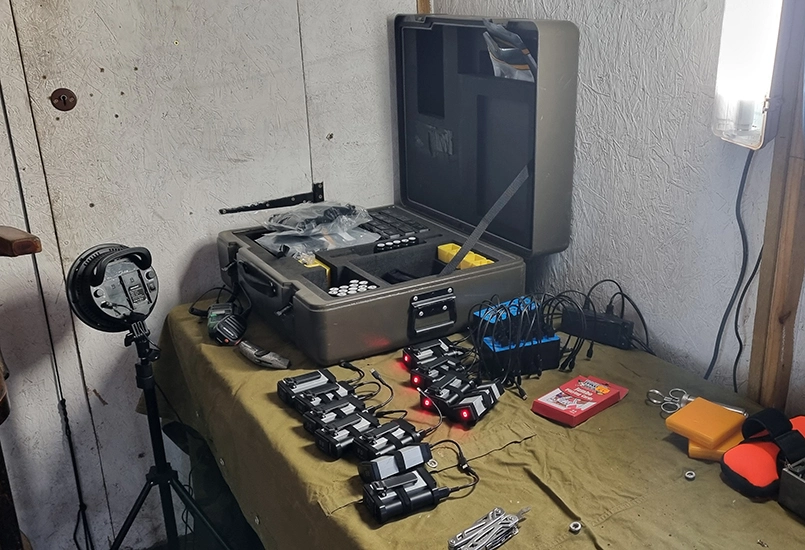
Operationally, it was exhausting. Constant swaps. Charging tables covered in cables. The organiser becoming a full-time technician just to keep the system alive.
Crucially, the mechanic itself had not failed. Players still understood radiation. They still respected it. What failed was the assumption that a complex, always-on device could survive without being engineered for endurance.
That distinction mattered. The system was worth saving.
The next iteration was a reset, not an upgrade. The goal was no longer features. It was stability.
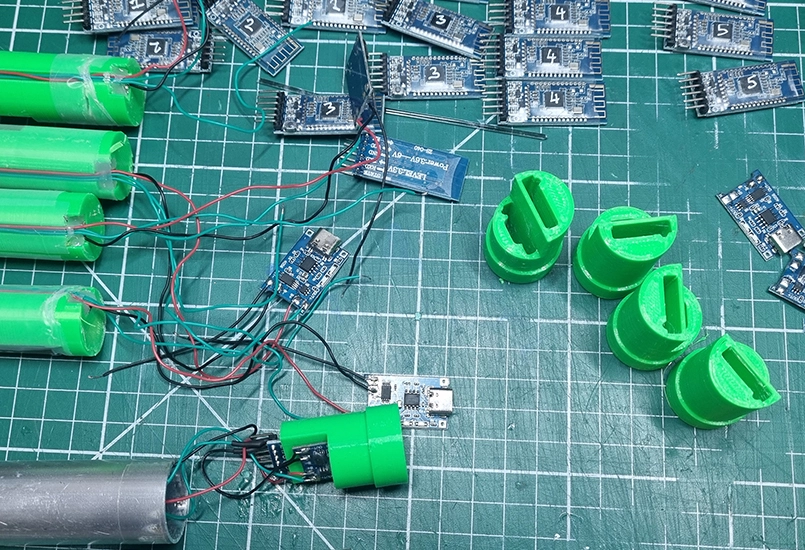
Power became the primary constraint. Displays slept instead of glowing constantly. Scan cycles were controlled. Components became modular so failures could be fixed quickly rather than written off. Electronics stopped being hard-wired and became serviceable.
The effect in the field was immediate. Battery life stretched from hours to most of a day. Swap-outs dropped dramatically. Devices stopped behaving erratically as power fell. Players stopped questioning the system and started trusting it.
At this point, radiation became reliable. That reliability mattered more than any feature ever added.
If the dosimeter is the interpreter, the rad stick is the author.
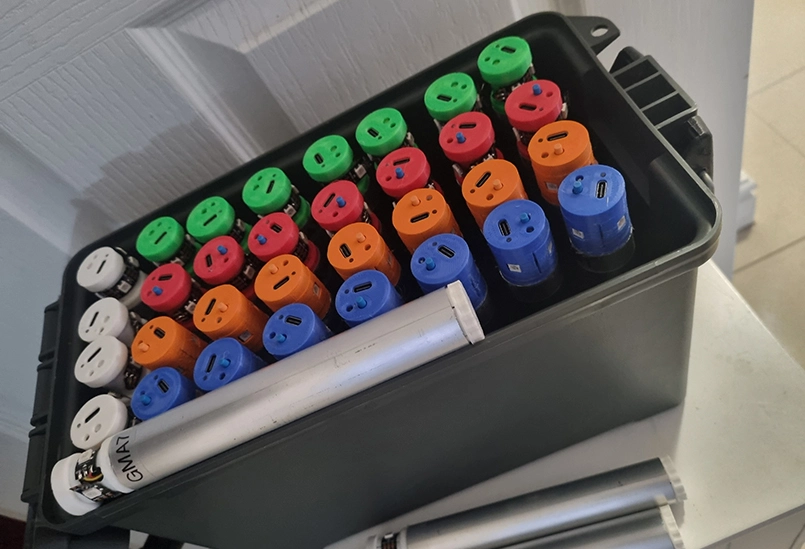
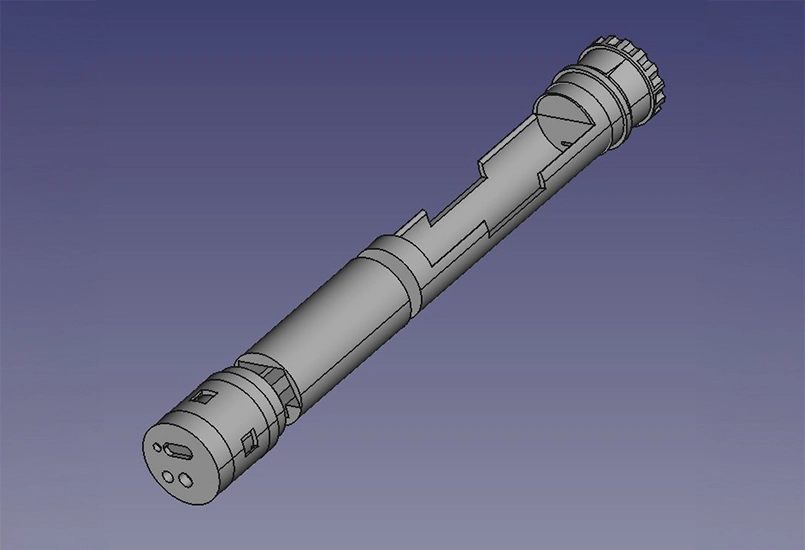
Rad sticks were deliberately kept simple. A battery. A Bluetooth broadcaster. An on-off switch. Nothing else. No lights to admire. No microcontrollers to babysit. They could be deployed, forgotten, and still be running the next morning.
This simplicity turned placement into the real design tool. Spacing rad sticks created soft gradients or hard denial zones. Clustering them locked down buildings. Terrain and materials naturally shaped exposure without a single line of rules.
Mistakes still happened. Players found gaps. Fast movement exposed scan-rate limits. Those failures didn’t break the system. They taught where new mechanics belonged.
Kill zones, healing zones, and protective artefacts emerged as extensions, not fixes. The core remained unchanged.
This stopped being about building a dosimeter. It became about building trust in an invisible threat.
Radiation works in these games because it is physical, persistent, and unfair in the right ways. Players cannot argue with it. Organisers do not need to police it. The environment enforces the rules.
That outcome only came from letting the field break early ideas and listening when it did.