A spoof decontamination system for the StAlkErS Filmsim events
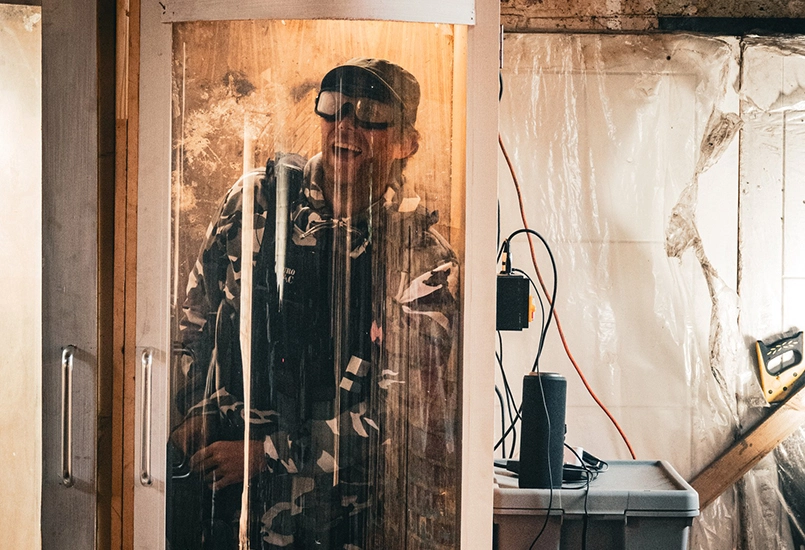
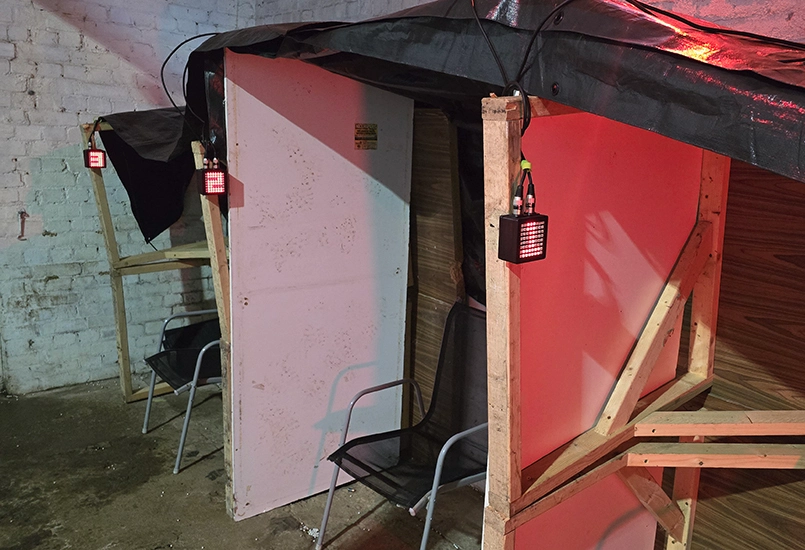
In the StAlkErS universe, returning from the wasteland needed structure. Players were drifting back into the safe zone, trading, repairing kit, and resetting state without friction. That broke pacing and weakened immersion.
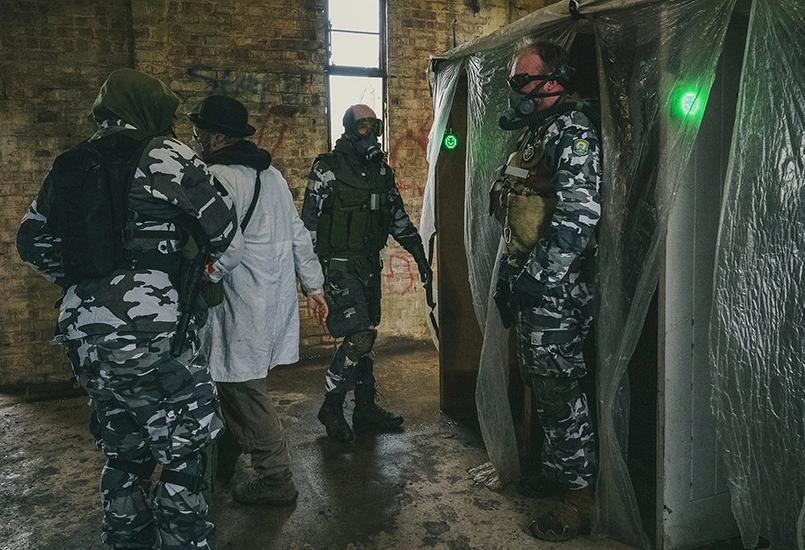
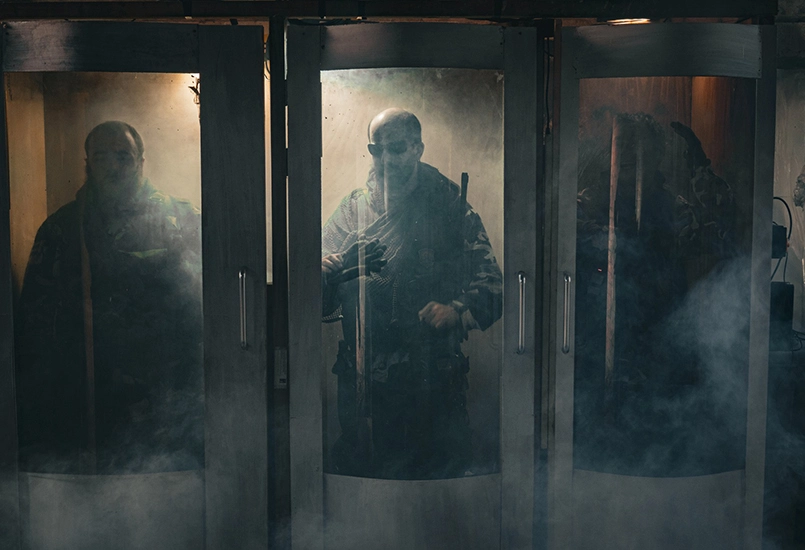
The decontamination pods were designed to act as a mandatory checkpoint. A place players had to pass through before re-entering safety, commerce, or medical support. Not a suggestion. A rule, enforced through fiction.
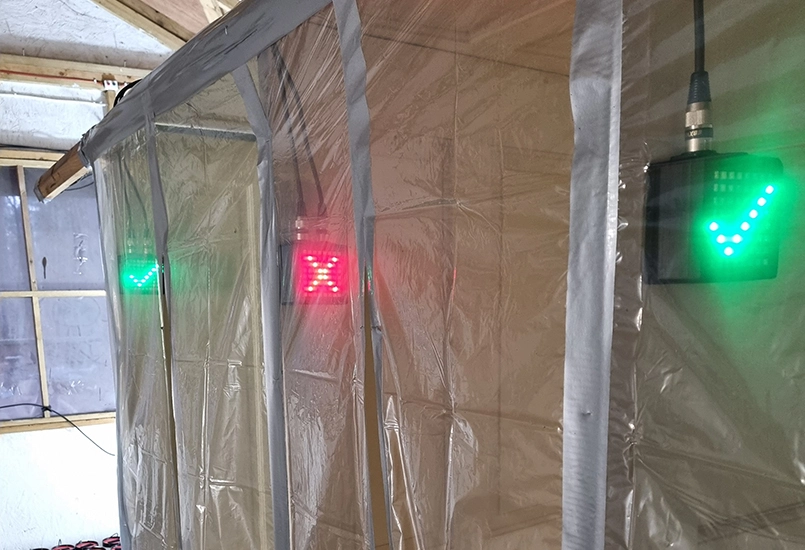
Three pods running a sub-20-second cycle proved to be the right balance. Enough capacity to avoid queues, slow enough to be witnessed. Failure was public, success was visible, and onlookers were entertained.
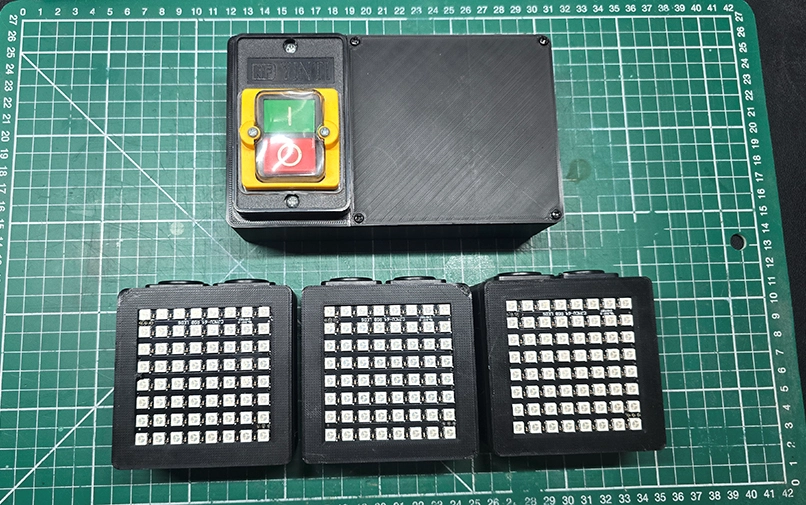
The system was intentionally simple. One operator, two buttons, one sequence. Players stepped inside, waited, and watched the scan play out. No choices, no shortcuts, no negotiation.
That lack of agency only works because the sequence is short. Any longer and it would become friction instead of theatre.
Pod failure is driven by pseudo-random logic on the microcontroller. Deterministic under the hood, unpredictable in play.
This created an unexpected layer of social gameplay. Regular players suspected patterns. Operators could hint or stay silent. Favouritism, superstition, and folklore emerged naturally.
There is no manual override. The operator is not a god, but a gatekeeper. That balance proved important and was never changed.
Each pod uses a 10×10 NeoPixel matrix. Not for decoration, but for clarity.
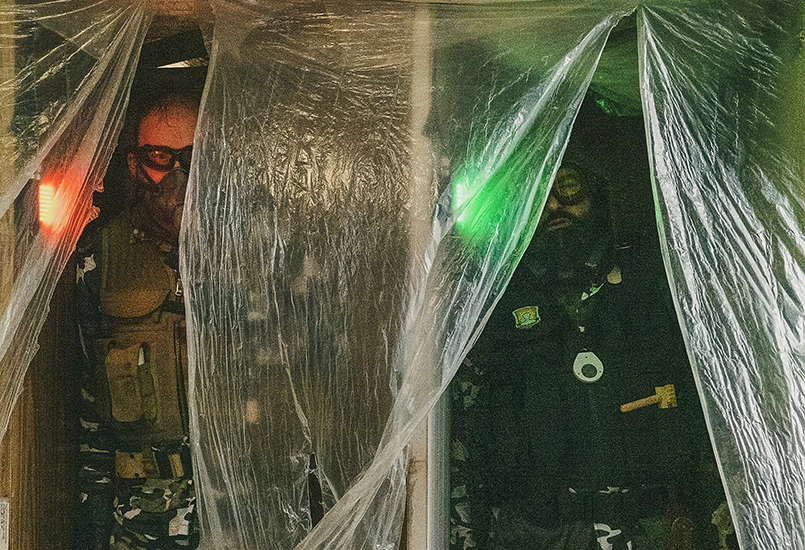
Players arrive masked, goggled, and often wearing coloured gel filters. Small indicators would have failed. Large animated matrices with scanning lines, ticks, crosses, and faces were readable at a glance and reinforced anticipation during the sequence.
Audio carried the drama. Smoke machines were tested and rejected due to power draw and reliability. Failure that looks intentional is better than spectacle that breaks.
Physically, the system never needed iteration.
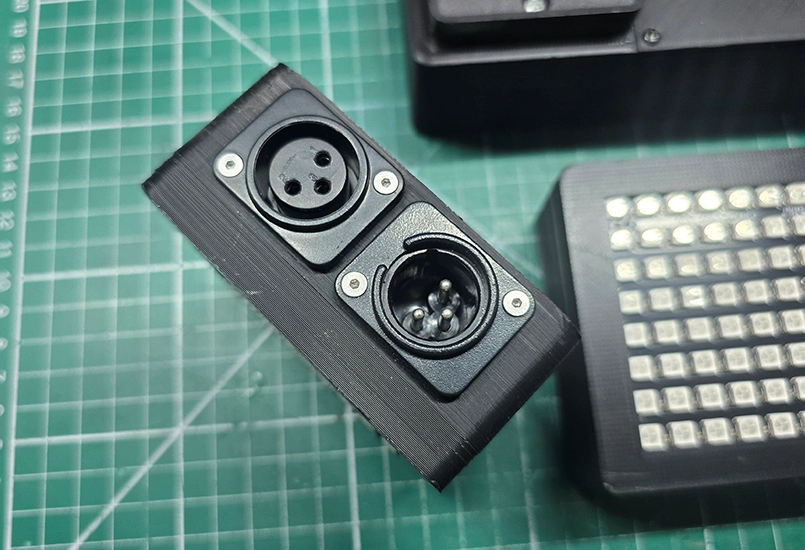
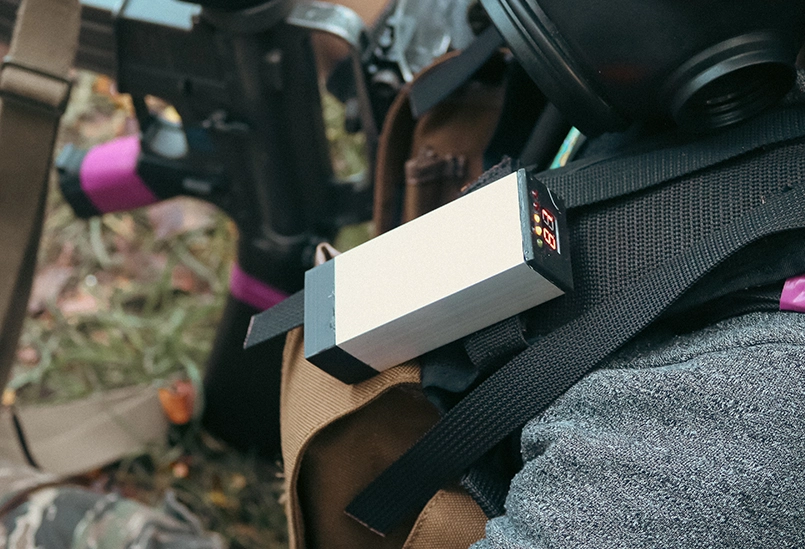
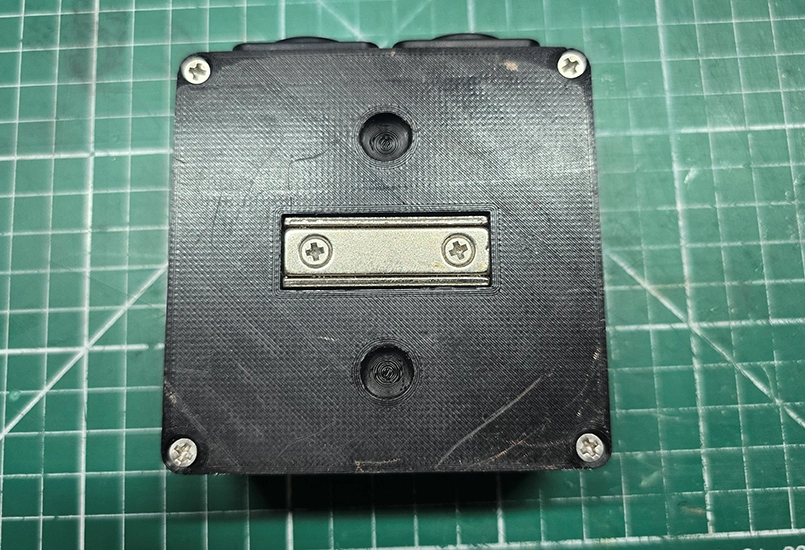
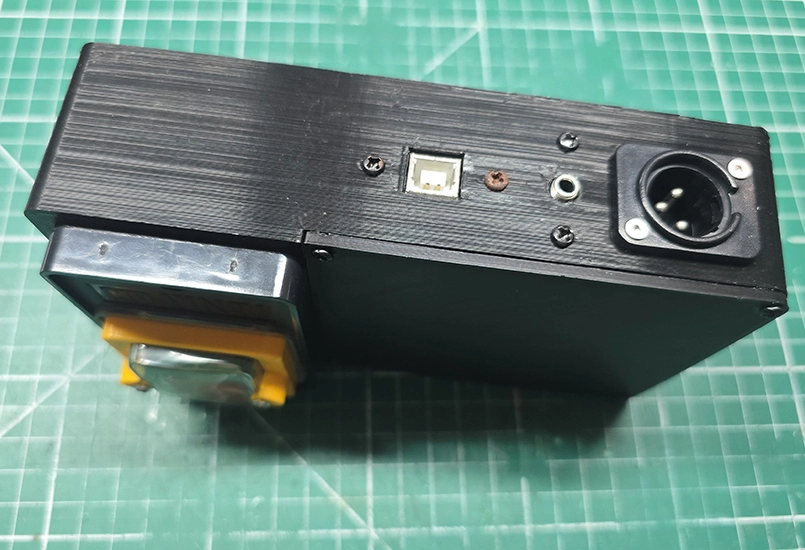
Magnetic mounting allowed flexible placement. XLR cables carried power and data between pods, allowing rapid setup at different venues. Everything ran from a generator-fed USB supply without batteries.
The only evolution came in sound design. A long, soothing voiceover was replaced with a shorter, more abrupt announcer voice. The change increased clarity, comedy, and player response without altering the system itself.
Iteration one is still the version in use.