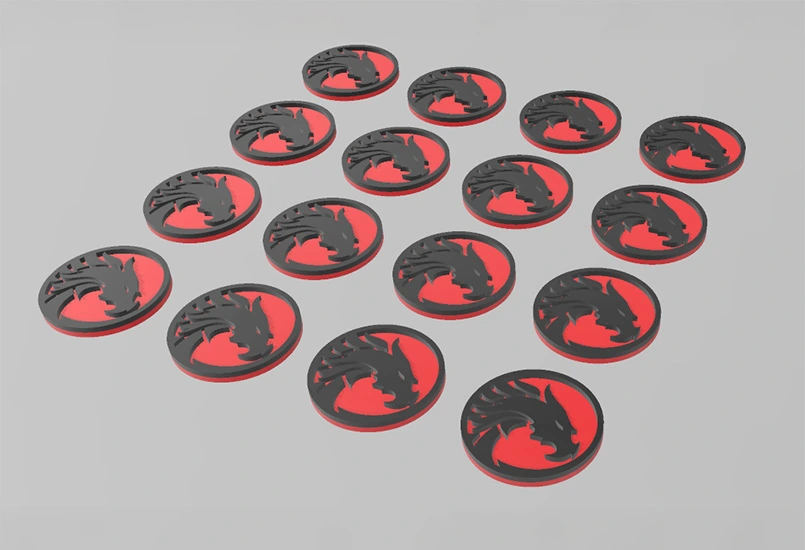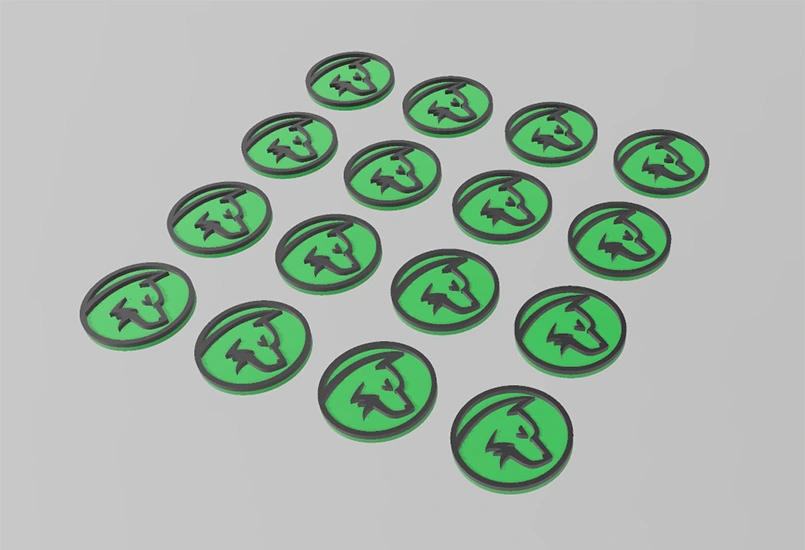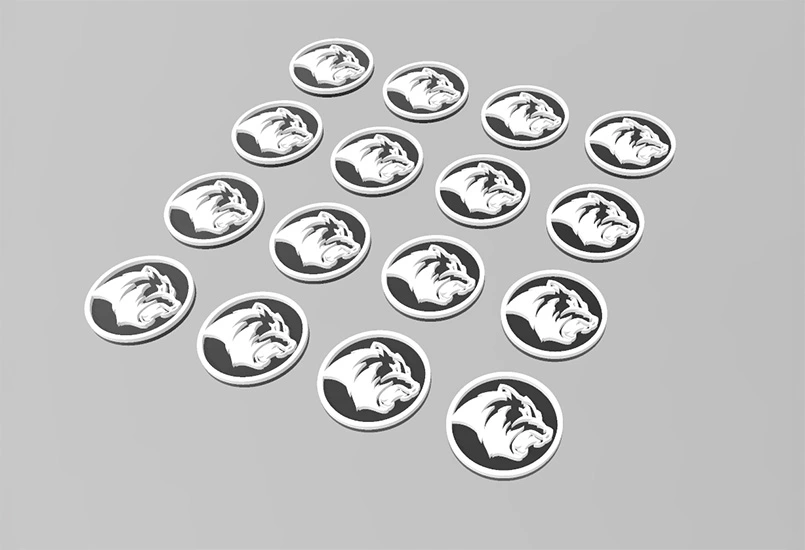
A single pass, 3D printed 2 colour chit token for the StAlkErS Filmsim game
The StAlkErS game has always revolved around settlements, influence, and reputation. In the first event, that influence was represented by paper chits printed on A4 sheets and cut by hand. They worked, but barely. They tore, bent, got lost, and took hours to prepare. Handling them with gloves and masks was awkward, and counting them at the end of the game felt more like admin than ceremony. The mechanic was solid. The medium was not.
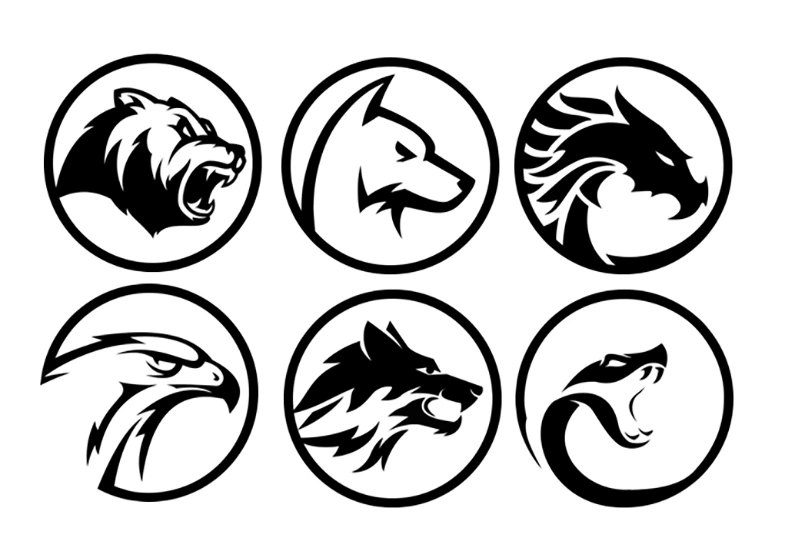
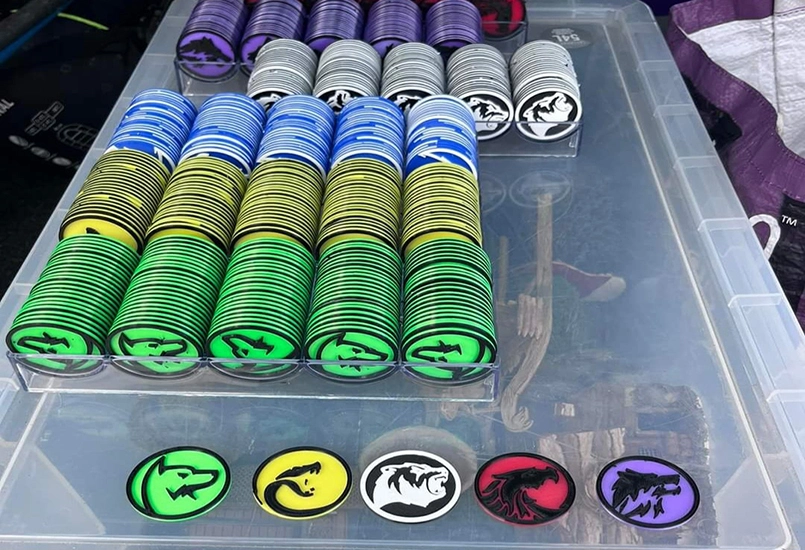
The goal was to replace paper with something durable, readable, and unmistakably part of the StAlkErS universe. Each team needed a clear identity, so simple animal icons were chosen and refined in Illustrator into bold outline symbols. The final size matched a poker chip. Large enough to handle with gloves, small enough to carry in quantity, and visually familiar as a token of value.
Each chit was built as a two-part design. A 40 mm base disc and a raised team icon, each 2 mm thick. Models were created in FreeCAD and exported for printing. With no multi-material printers available at the time, colour changes were handled mid-print using firmware-supported filament change commands. At 0.2 mm layer height, the printer paused exactly at 2 mm, allowing a clean colour swap and perfect alignment.
Production ran on Ender-3 printers with 16 chits per build plate. Printing was slow and hands-on, with regular filament swaps and careful bed calibration. Adhesion failures and warped beds caused losses early on, but firmware upgrades, BLTouch calibration, and experience reduced failures to around ten percent. Final quantities landed close to 200 chits per team.
Chits are purchased with bullets and have one destination only. Settlement postboxes. They cannot be traded, stolen, or repurposed. This removed hoarding behaviour and kept the mechanic clean and honest. Teams either committed to supporting settlements or sold unused chits back for survival resources.
Switching to physical chits did not alter game balance or pacing. What it changed was clarity and immersion. Players trusted the system, handled it easily under stress, and treated chits as tangible proof of success. The lesson was simple. When a mechanic matters, it deserves a physical form that players can feel, not paper they can lose.