A budget experiment in recording airsoft night games using a modified action camera and infrared illumination
When I first started playing airsoft, recording gameplay was straightforward during the day. A standard GoPro mounted to a cap or helmet worked well enough, and I already had success with a low-profile cap mount for daytime games. Night games were a different story. Footage was either unusable or pointless, with the camera effectively blind once light levels dropped.
Night games, especially Halloween events, were some of the most atmospheric and memorable experiences I played. Yet there was no practical way for me to capture them. Proper night vision goggles were expensive and still did not solve the recording problem. Cheap digital night vision cameras existed, but they were low resolution, bulky, poorly built, and not shaped in a way that suited helmet or cap mounting. I wanted something action-camera sized, reasonably robust, and capable of recording usable footage at night.
The obvious option at the time was the SiOnyx Aurora. It offered digital night vision with recording, but at a price point that made little sense for an experiment. More importantly, after speaking with other players who had used one during airsoft games, it became clear that it was not well suited to fast-moving night gameplay.
Gen 2 and Gen 3 night vision rigs were another option, but these introduced a different problem. While they offered excellent visibility, they still required a separate recording solution and significantly increased cost and complexity. At the other end of the spectrum were very cheap night vision cameras, often sold through AliExpress-style marketplaces. These were fragile, awkward to mount, and produced poor video quality.
The project needed a different approach.
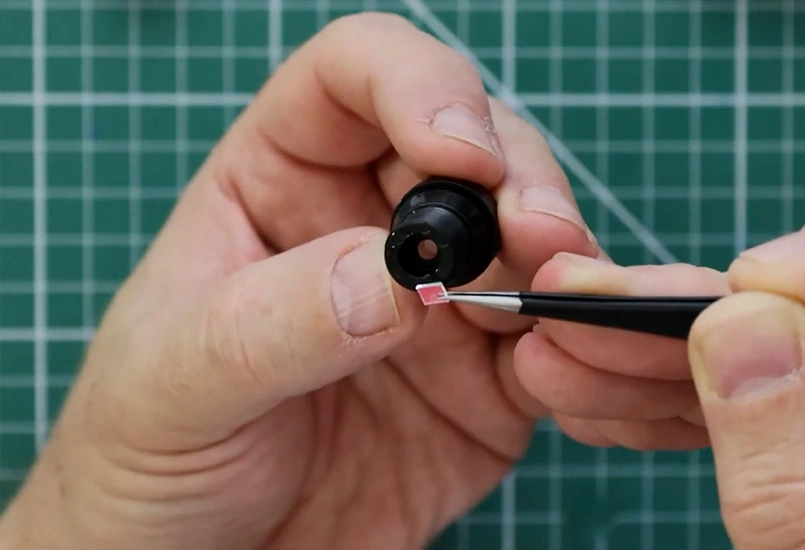
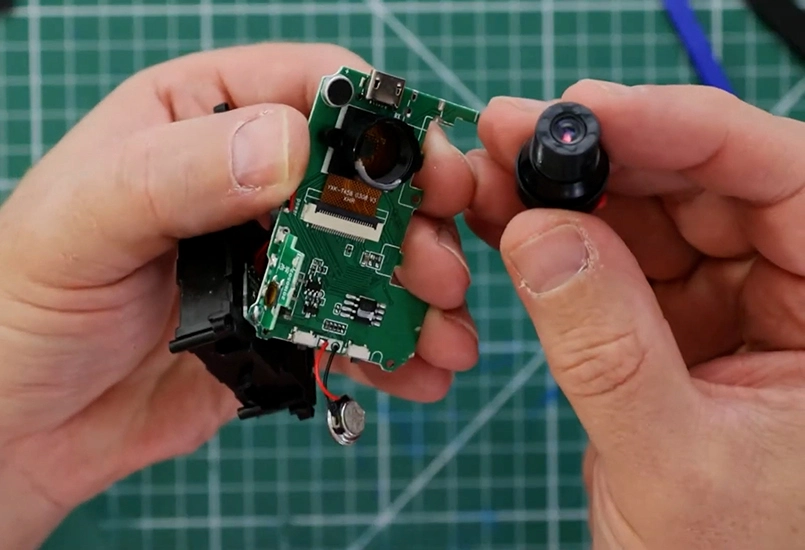
The breakthrough came from an unexpected place. Paranormal and ghost hunting videos demonstrated that many action camera sensors are already capable of seeing infrared light. The limitation is not the sensor, but the infrared cut filter built into the lens. Remove that filter, and the camera becomes IR-sensitive.
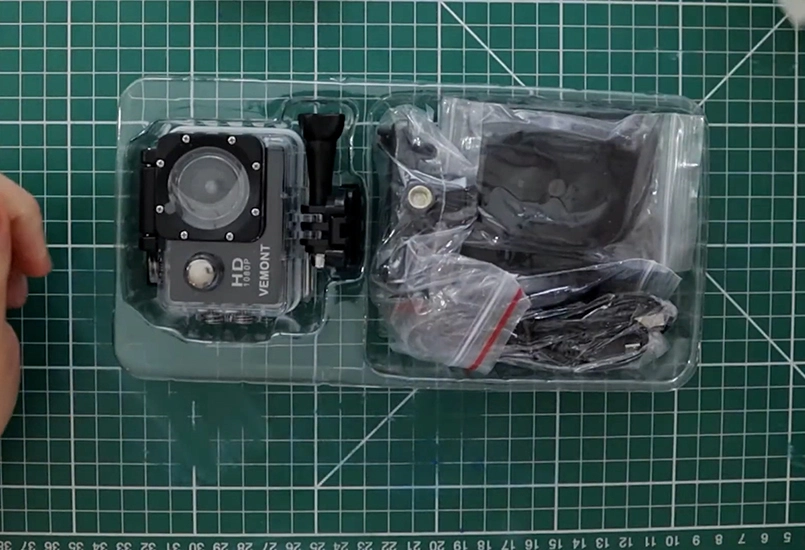
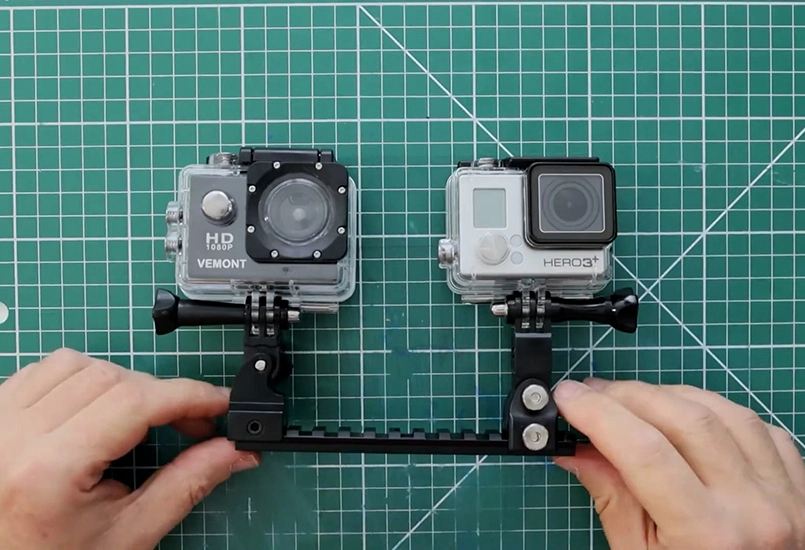
Rather than risking a genuine GoPro, I chose a cheap GoPro-style knockoff action camera. These cameras use similar sensors, cost very little, and are far easier to disassemble. If something went wrong, the loss would be minimal.
The modification itself was simple in concept. Open the camera, remove the lens, extract the IR filter from the lens assembly, and reassemble everything. In practice, it required care. I destroyed one camera early on by pulling the internals apart too aggressively and ripping a ribbon cable. That mistake made it very clear how fragile these devices are internally.
Once modified, the camera powered on and recorded as expected, but focus became the next challenge. Removing the IR filter changes the focal characteristics of the lens. With no external live feed option, focus had to be dialled in manually using test recordings and incremental adjustments. Once set, the lens was fixed in place with a small amount of hot glue to prevent drift.
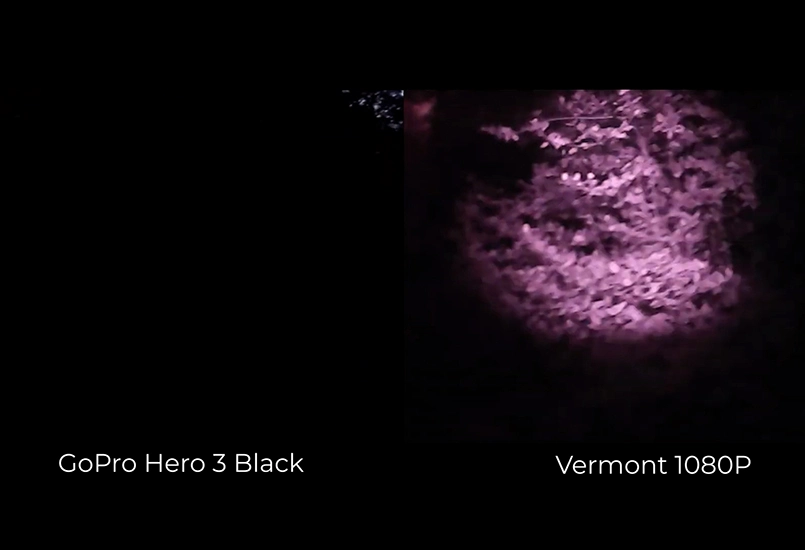
The compromises were obvious and accepted. The camera was now useless during the day, producing a pink-tinted image without the IR filter. It also relied entirely on infrared illumination. Without an IR torch, the footage was completely black. This was a night-only tool, built for a specific purpose.
The modified camera was used during a Halloween night game and performed as expected. Image clarity was acceptable, motion blur was not a major issue, and battery life was sufficient for a game. Mount stability caused no problems.
The most noticeable limitation was illumination. A focused IR torch created a tunnel-vision effect, with a bright circular area in the centre of the frame and darkness around it. A wider IR flood would have improved coverage, but even with this limitation, the footage was usable and effective for documentation and later review.
Importantly, the setup provided no gameplay advantage. I was still playing in the dark. The infrared illumination existed solely for the camera, not for real-time visibility.
At the time, this project achieved exactly what it set out to do. It demonstrated that recording night games did not require expensive equipment, only a willingness to experiment and accept limitations. Today, body-worn security cameras offer automatic day-night switching and built-in IR illumination, making this approach largely obsolete.
Even so, as a budget solution and a snapshot of early night-game problem solving, the project still holds up. If the constraint is cost, the approach remains viable. If budget allows, newer technology is the sensible choice.
This project also sits naturally alongside the GoPro baseball cap mount work, forming part of an early phase focused on capturing airsoft gameplay with minimal, practical hardware rather than high-end equipment.