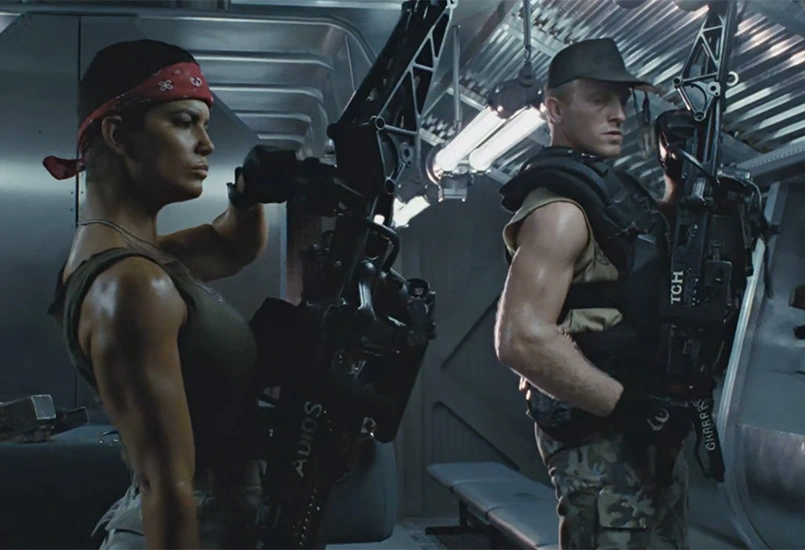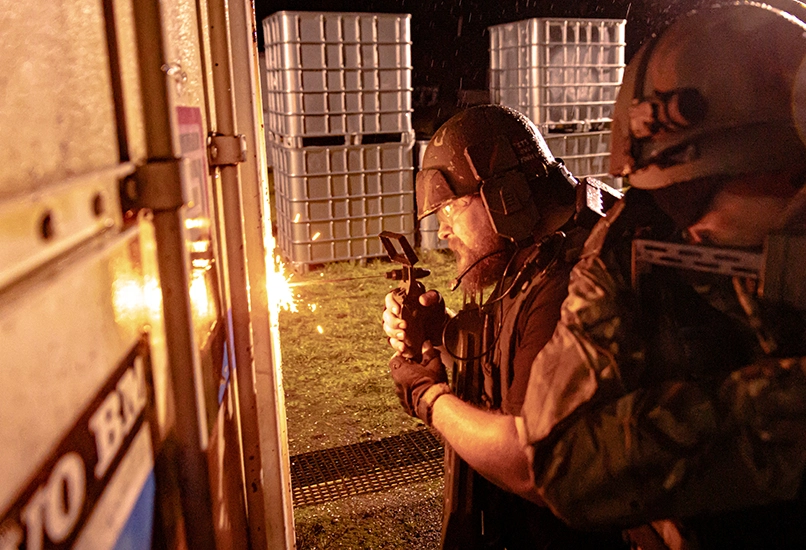
The M314 Motion Tracker began as a practical game device for a Gunman Airsoft Halloween Special night event themed around Aliens
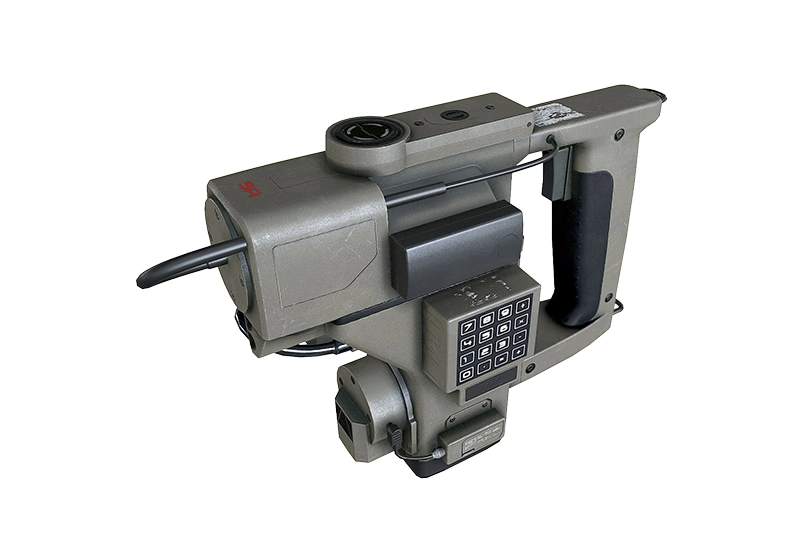
The setting featured US Colonial Marines operating in low light, high stress environments against an unseen enemy. The goal was not decoration. It was psychological pressure.
Colonial Marines carry kit with purpose. A tracker that did nothing would have undermined the fiction. If it was going to exist, it had to influence behaviour. The device needed to create doubt, hesitation, and moments of panic. Accuracy to the film mattered, but gameplay came first.
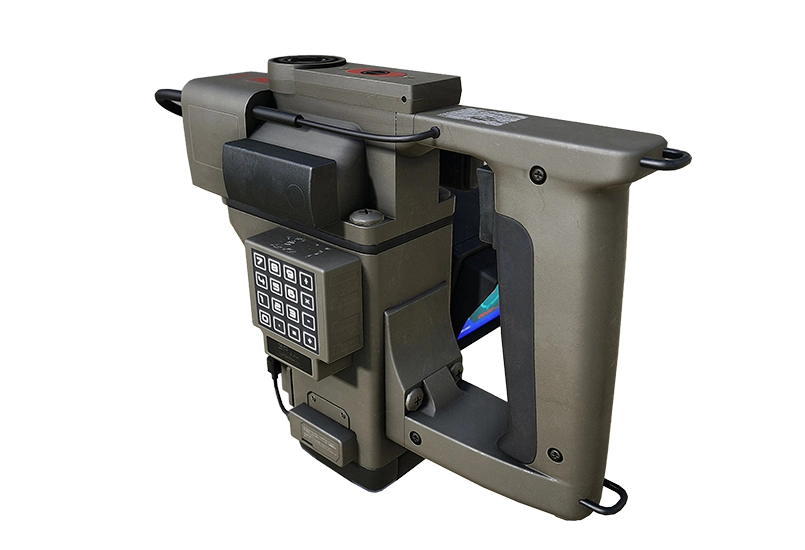
The initial build was a purely physical replica based on a well modelled 3D print. It looked right. It felt right. It was also dead.
That was not acceptable.
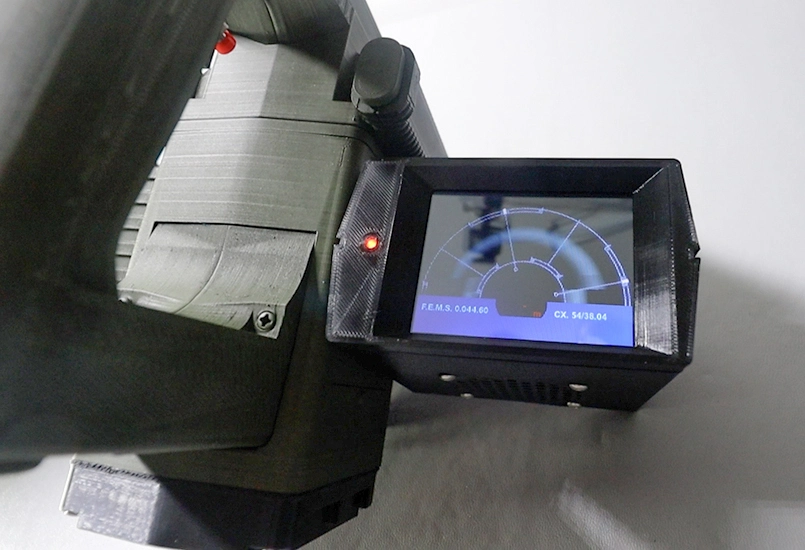
The second phase introduced a working screen, sound, and simulated tracking behaviour. The intention was never to detect real players. It was to simulate threat escalation convincingly enough that users would believe it mattered.
This was a deliberate design choice. Real sensing would have added complexity and failure points without improving the experience. Illusion, when done properly, was enough.
Four units were built. This was not a hero prop. It was small batch production under time pressure for live gameplay.
Everything had to fit inside the shell. No external packs. No trailing cables. No fragile appendages. The device needed to survive being carried, dropped, and passed between players in the dark.
Internally, compromises were made. Boot time was slower than ideal. Calibration could drift. Orientation mattered more than expected. None of these were catastrophic, but they revealed the difference between bench builds and field use.
What mattered was that once running, the device felt real.
In live play, the tracker worked better than expected.
NPCs relied on it. Players clustered around it. Decisions were made based on what it showed and what it suggested. The beeps alone were enough to change movement and posture. The screen reinforced it. The weight and presence sealed it.
Nobody asked how it worked. Nobody cared that it was simulated. The illusion held.
That was the real success condition.
Post-event validation came quickly and from unexpected places.
One unit was later handed to a child who spent the evening hunting imaginary aliens around a house. The behaviour mirrored the game perfectly. Trust in the device. Curiosity. Escalating tension.
Interest followed. Requests to buy one. Not as a game tool, but as a replica. The project had crossed a line without being pushed.
One unit was kept. One was gifted. Two were sold at cost. Not as a business decision, but as a fan gesture. These props are rare. When they do appear, they are prohibitively expensive. Making one accessible felt right.
This project reinforced a recurring pattern.
Perceived function matters more than actual function. Immersion beats accuracy when the experience is the goal. Reliability is not about perfection, but about predictability under stress.
Most importantly, it highlighted the difference between building something that looks correct and building something that behaves correctly in context.
The Aliens M314 Motion Tracker was built for a game. It ended up as a film-accurate prop with simulated behaviour. Both outcomes were valid. Only one was intentional.