Welder prop from the Aliens movie, built using 3D printed parts and a sparkler
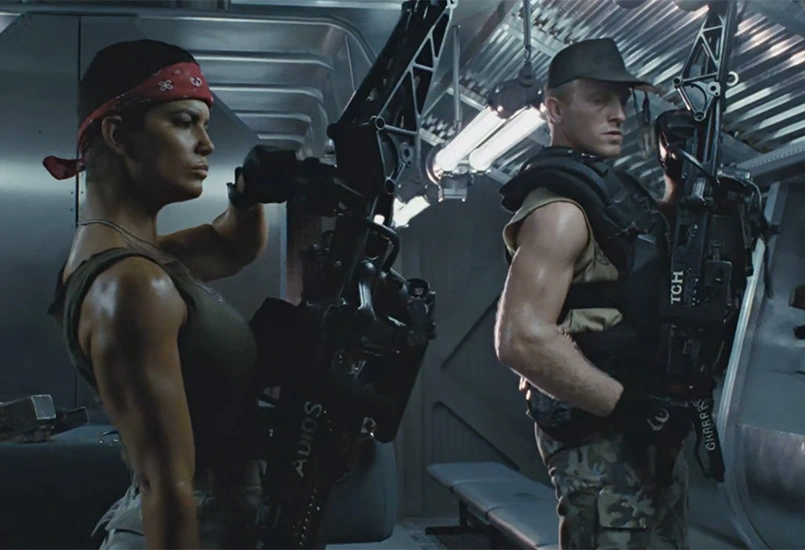
The Aliens ME3 Welder started as a piece of visual inspiration from Aliens movie, specifically the barricade scene where the Colonial Marines weld doors shut to hold back the Xenomorphs. It is a small moment in the film, but a powerful one. Welding is slow, noisy, vulnerable, and cinematic, which makes it perfect as a gameplay concept.
The original intent was not to build a replica prop for display, but to answer a more interesting question: could “welding” become a real, physical action inside a live airsoft game?
Real welding is obviously impossible in a game environment. It is dangerous, requires power, produces heat, and cannot be controlled safely around players.
At the same time, simply pretending to weld or pressing a button would completely miss the point. The mechanic needed to look convincing at a distance, take a meaningful amount of time, and force players to protect someone performing a vulnerable task under pressure.
The challenge was creating a believable special effect that felt real, without introducing any real risk.
The breakthrough came with a simple idea: use a standard firework sparkler as a consumable welding rod.
Sparklers already look remarkably like welding arcs. They are bright, noisy, throw sparks in all directions, and burn for roughly one minute. By modifying the tip of the ME3 Welder to hold a single sparkler, the prop instantly became a practical special-effects device.
When ignited, the operator could physically draw a line down a shipping container door, producing a shower of sparks that looked exactly like active welding, while remaining safe, low-tech, and fully portable.
The welder became the core gating mechanic for the Gunman Airsoft Aliens Halloween scenario.
Players had to locate alien eggs hidden inside shipping containers, then physically seal those containers shut to prevent the eggs from hatching. Progress was impossible without a Colonial Marine welding the doors closed using the ME3.
The sparkler acted as a visible countdown timer. While it burned, other players had to defend the welder from attack. If the welding was interrupted or failed, the objective failed.
This transformed the prop from a visual gimmick into a hard physical game system that directly controlled victory conditions.
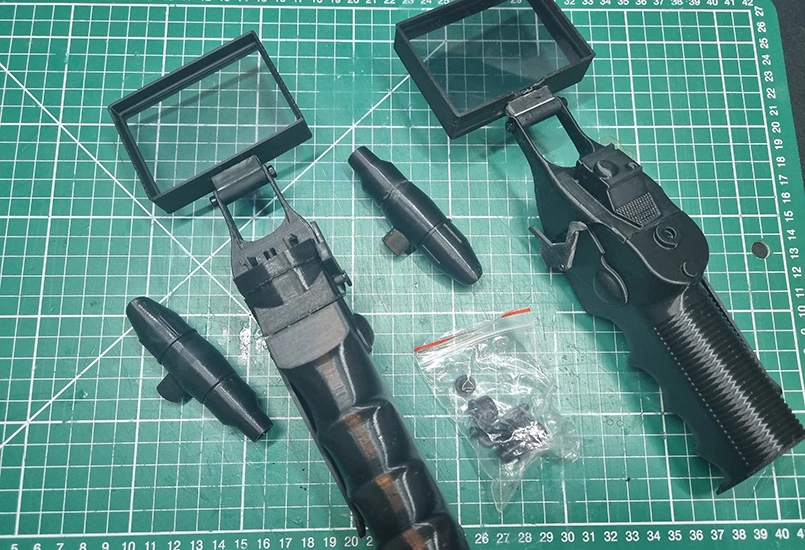
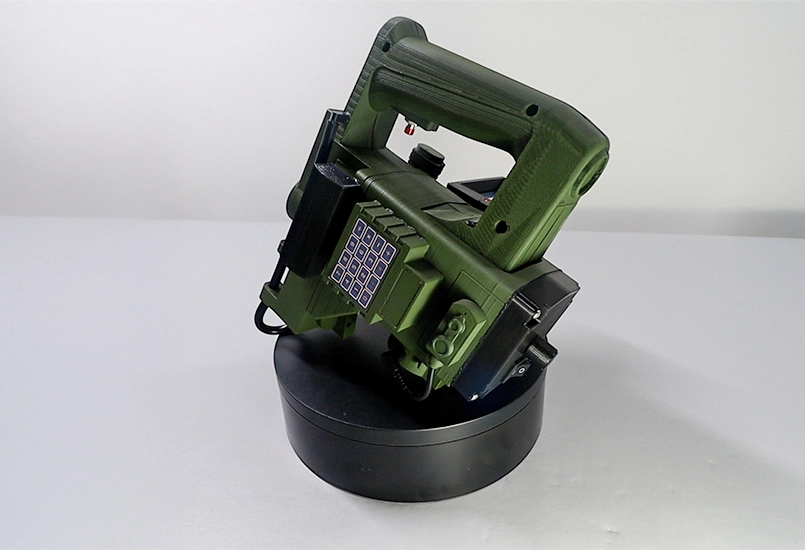
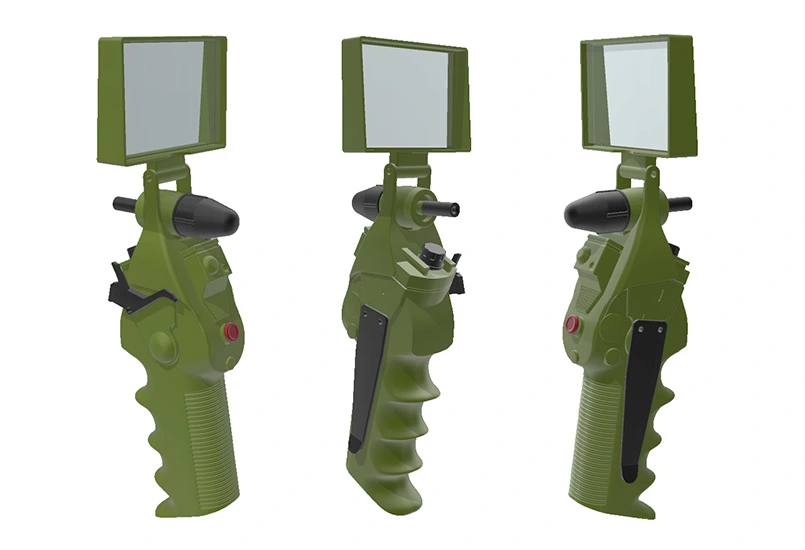
The physical prop itself was based on a high-quality STL from Cults3D, printed in ABS and assembled as a one-to-one scale replica of the film version.
The only major modification was the reinforced nozzle, designed to safely hold a sparkler. The viewing screen was made from laser-cut acrylic with automotive window tint applied, allowing the operator to see the sparks while maintaining the look of a darkened welding lens.
The finished prop was lightweight, robust enough for live events, and visually convincing at both close range and from across the site.
Although the effect looked dramatic, safety was always central to the design.
The ME3 Welder was operated exclusively by trained staff, never by players. The sparkler was treated as a controlled pyrotechnic effect, with clear rules on where it could be used, what it could be pointed at, and how spent sparklers were disposed of.
The result was a high-impact visual effect with zero electrical systems, zero heat sources, and no realistic risk.
The ME3 Welder was used across two major events and became one of the most memorable mechanics in the scenario.
From a distance it looked like real welding. Up close it was clearly a clever illusion. Most importantly, it created genuine tension, forced teamwork, and turned a small cinematic moment into a physical, high-stakes gameplay system.
It remains a perfect example of how simple, low-tech solutions can outperform complex electronics when the goal is immersion, stress, and believable interaction.