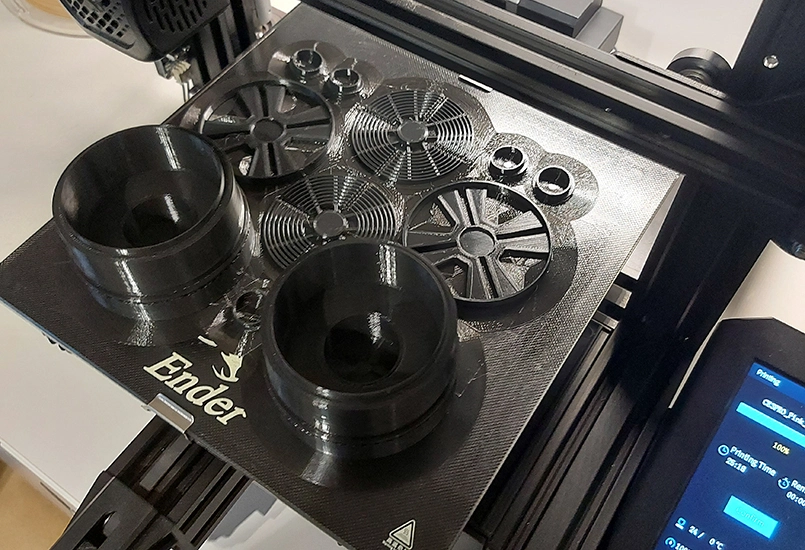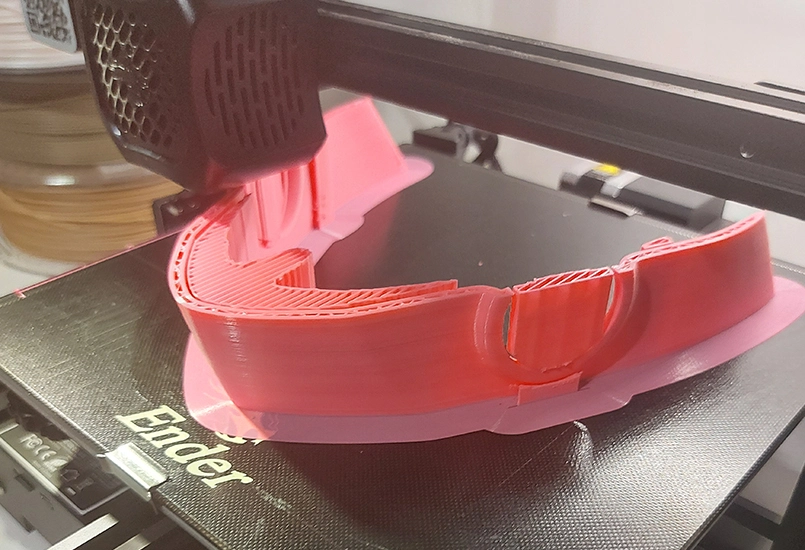
The creation of a 3D printed replica of the pink mask from the movie "6 Underground".
This project started with a very simple and very wrong assumption: that making a movie prop was essentially a one-click process. I had recently bought my first 3D printer, a Creality Ender-3, and believed that all I needed to do was find a model online, load it into the slicer, and wait for a perfect replica to emerge. I had no real understanding of materials, printer limitations, tolerances, or post-processing. At that stage, a 3D printer still felt closer to a Star Trek replicator than a manufacturing tool.
The mask was downloaded from an STL site and printed in multiple sections to fit the Ender-3’s small build volume. Everything was printed in basic pink PLA because it was cheap and easy to source. The side filter canisters were printed separately in black PLA and glued on later. There was no thought given to structural strength, wall thickness, print orientation, or surface quality. I was still discovering concepts like layer height, infill, and why curved surfaces exaggerate print artefacts.
Once assembled, the biggest problem was immediately obvious: layer lines. Lots of them. My solution at the time was brute force. I covered the entire mask in filler and started sanding until it felt smooth enough to paint. This technically worked, but it completely defeated the original point of using pink filament in the first place. The printed colour became irrelevant, and the mask effectively turned into a grey filler sculpture that required full repainting anyway.
The most memorable lesson came during painting. Living in a small flat, I assumed I could give the mask a “light dusting” of pink spray paint indoors using a cardboard box as a makeshift booth. That decision resulted in a microscopic layer of pink overspray settling over the entire apartment. Floors, walls, furniture, and surfaces were all coated. It was the moment I learned, permanently, about ventilation, proper spray environments, and why workshops exist.
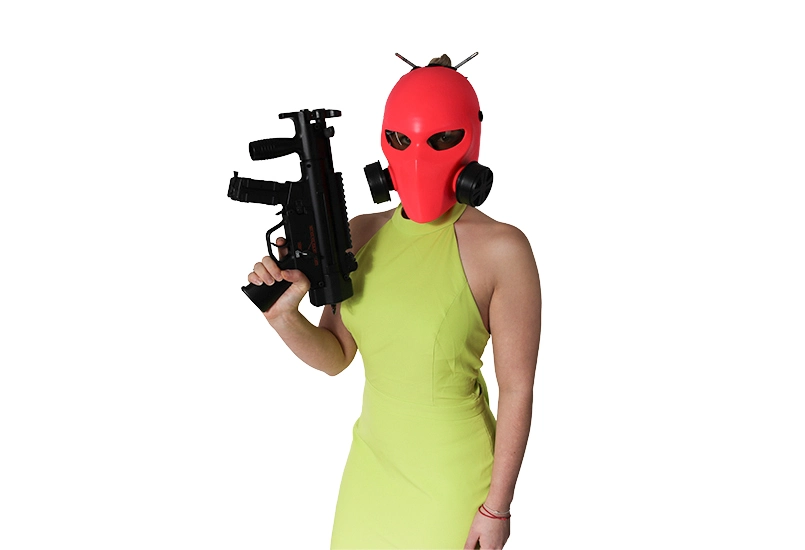
Despite the messy process, the final mask looked good. My niece loved it, wore it for a cosplay shoot, and we recreated scenes from the film using photography and Photoshop. The project even generated external interest when a friend asked me to make a second one. That copy was completed and posted, only to be lost by the courier somewhere in the UK.
This project was never revisited or remade. It remains frozen as an early learning artefact, marking the first time I unknowingly completed the full creative pipeline from digital model to finished prop for someone else.