
Fully functional wall-mounted jukebox with vintage design and modern features
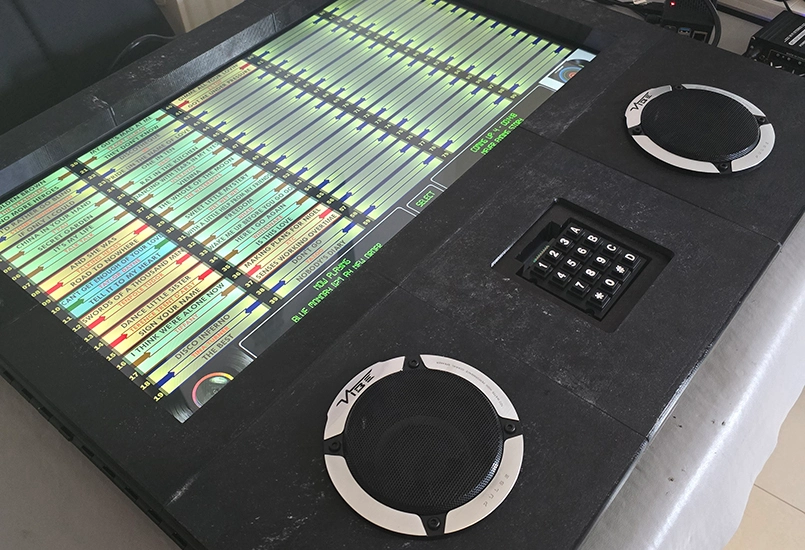
The idea began with a clear image. A wall mounted jukebox from an 1980s UK pub. Flat fronted, bold, practical, and designed to be used rather than admired at a distance. The aim was never to restore or replicate a mechanical original. The aim was to recreate the experience of a jukebox using modern tools, while keeping the interaction familiar. Browse. Select. Queue. Listen.
At the same time, the project had to exist within real constraints. This was built in a small flat, with a box room serving as office, workshop, and fabrication space. No table saws. No routers. No CNC bed large enough for cabinetry. That reality dictated every decision that followed.
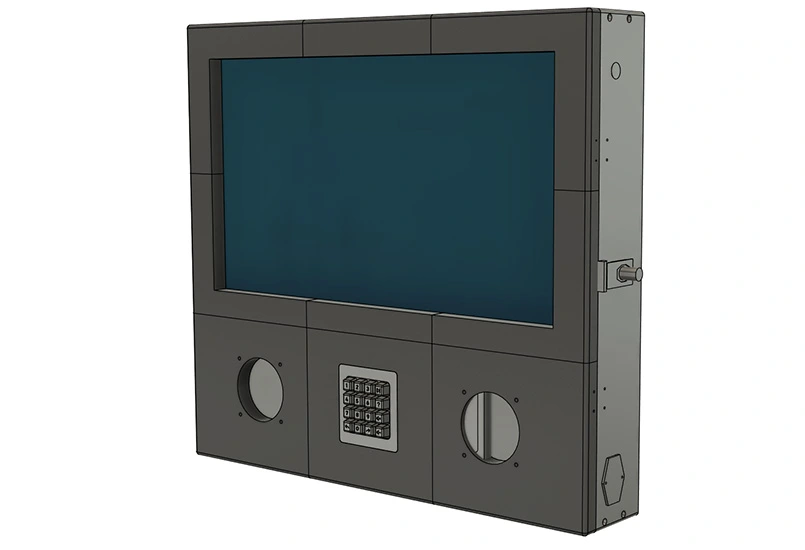
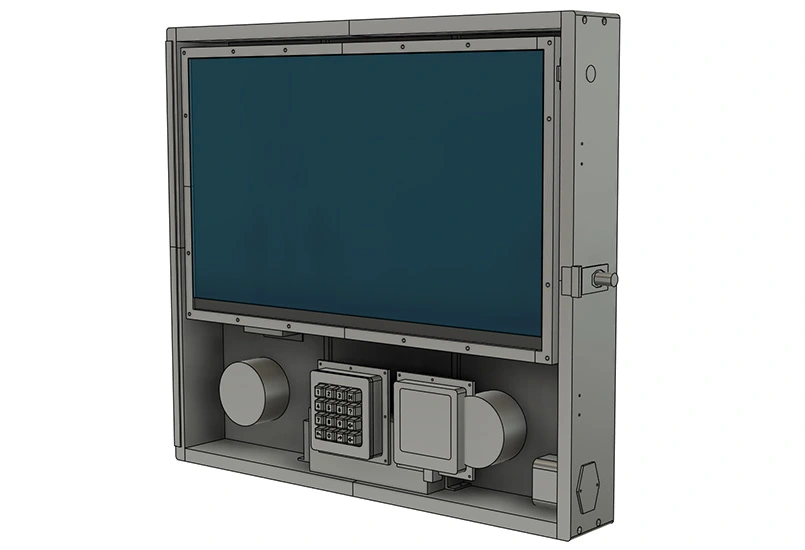
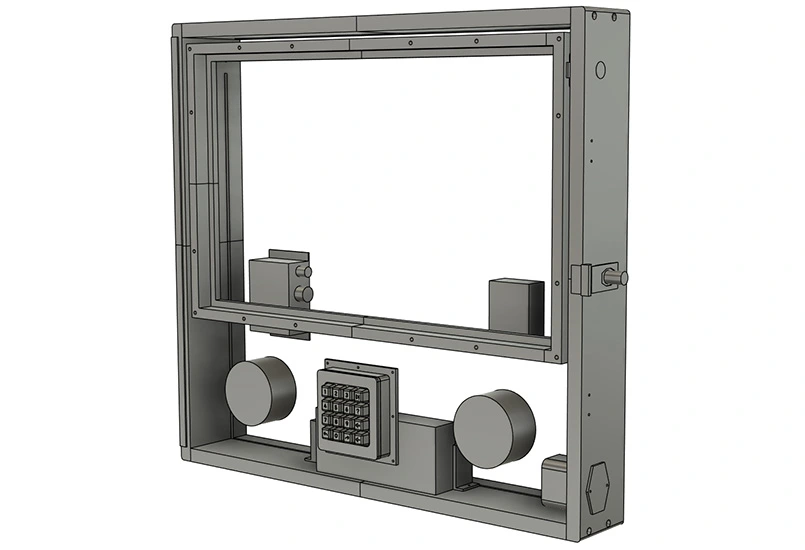
A traditional build in wood or metal would have required space and tooling that did not exist. The solution was to design the entire enclosure digitally and fabricate it in sections using a 3D printer. Fusion 360 was used to model the full jukebox, broken down into printable panels that could be assembled into a rigid structure.
PETG was chosen for strength, impact resistance, and stability. Parts were printed thick and assembled using metal dowel pins and mechanical fasteners. The dowels solved two problems at once. They guaranteed alignment across large flat joins and added structural strength that glue alone would not provide. The result was a heavy, solid enclosure that behaved more like cabinetry than plastic.
A thin plywood rear panel was added only for concealment. It carried no load and could be cut safely by hand, which kept the build within domestic limits.
The build followed a hardware first approach. The screen, speakers, keypad, hinge hardware, and mounting fixings were all purchased before the enclosure was finalised. The design wrapped around real components rather than forcing parts to fit an idealised shell.
The display became the visual centrepiece. A large, high resolution monitor was deliberately chosen to make browsing readable at a distance and to sell the illusion of a real jukebox selection mechanism. Two car speakers driven by a proper amplifier provided clean audio without hum or noise. Early experiments with small amplifier modules failed here, so they were discarded.
Access and serviceability mattered. A full height piano hinge allows the front panel to swing open, echoing the way pub jukeboxes were serviced. A lockable side catch keeps the unit closed during use.
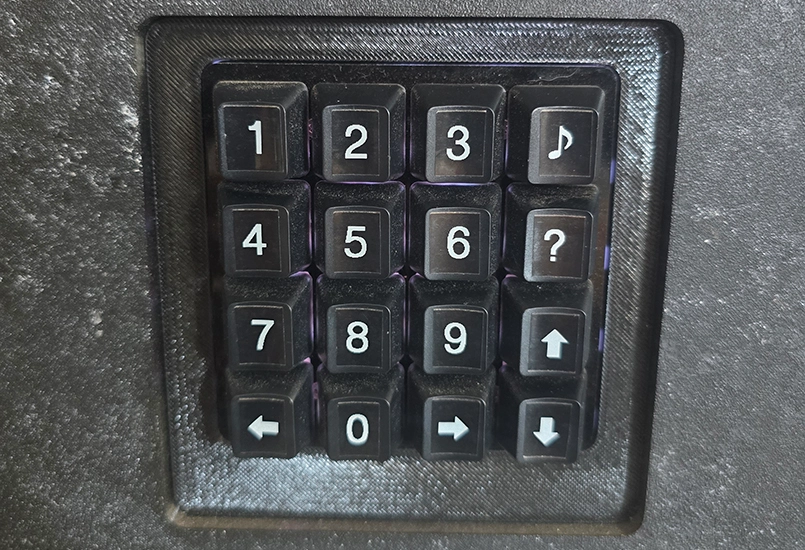
Initial plans to use a traditional matrix keypad wired through GPIO were abandoned. While workable, the complexity and fragility offered no real benefit. A USB based programmable keypad proved more reliable and far easier to integrate. Keys were labelled using laminated tape and mapped to clear actions. Numeric selection, paging, volume control, and random play.
The interaction model is intentionally familiar. Tracks are queued rather than played instantly. Users can stack selections or trigger a random queue that fills the playlist automatically. In practice, random play became the most used mode.
The jukebox runs on a Raspberry Pi using Fruitbox, an open source jukebox platform. Unlike appliance style systems, Fruitbox runs on a standard Raspberry Pi desktop environment. This required additional setup to hide the operating system, suppress desktop elements, and ensure the jukebox interface launched cleanly on boot.
Boot timing and full screen behaviour took iteration. Once solved, the experience became simple. Power on. Wait. Jukebox appears. No mouse. No keyboard. No visible operating system.
Multiple skins were configured to suit different music libraries, reinforcing the sense of a real machine rather than a static media player.
Sound reactive LED lighting was added behind the unit, facing the wall. The goal was glow rather than spectacle. Light reflects outward and responds to music without distracting from the interface.
The finished jukebox behaves like what people expect it to be. It is recognised immediately as a jukebox. Not a novelty. Not a disguised computer. It demonstrates that large, permanent, interactive builds are possible without a workshop, provided the design works with constraints rather than fighting them.