Why things that look right from 10 metres away reduces cost, complexity, and wasted effort.
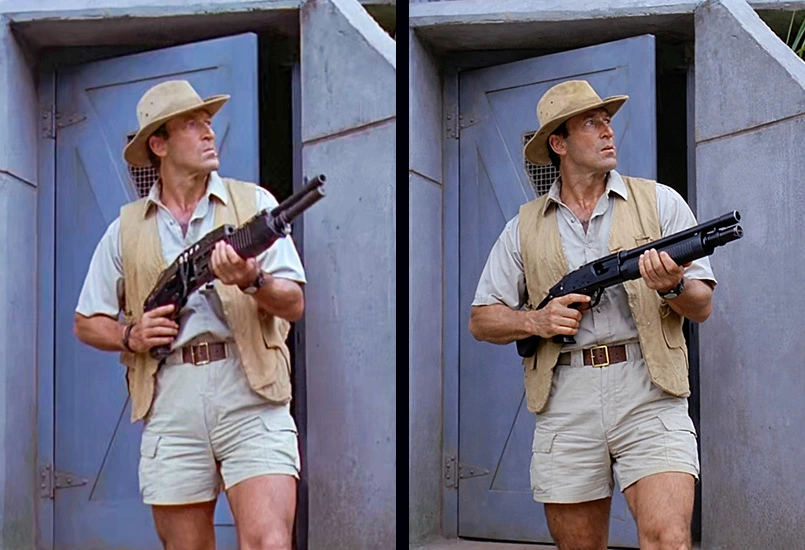
Take a look at this image. This is Muldoon, the park ranger from the classic 1990s film Jurassic Park. One is real and the other is technically inaccurate. Can you tell which is which?
The important thing is - they are both instantly recognisable as the park ranger from Jurassic Park. The hat, waistcost, shirt, shorts and shotgun - put them altogether and it creates the look for this character.
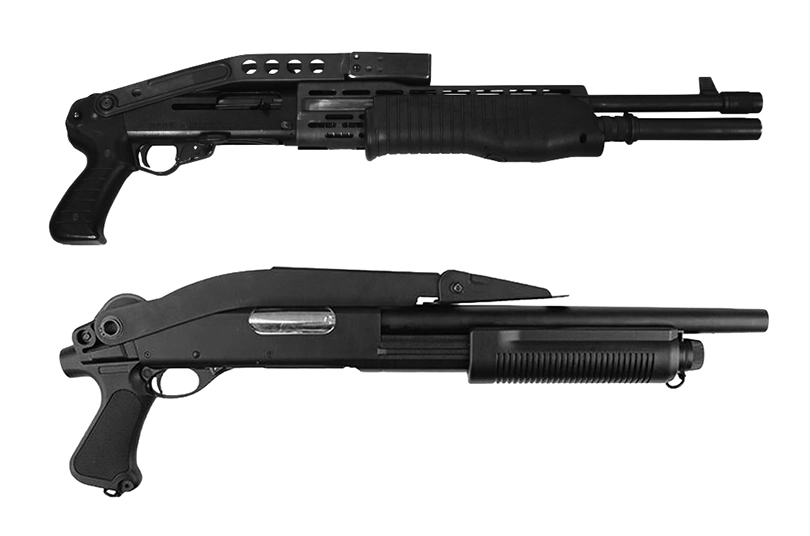
The real difference between the two images is the one on the left, Muldoon is carrying a SPAS-12 shotgun with a folding stock. A replica shotgun would cost £300+ and the folding stock is really hard to source. In the right-hand image, Muldoon is carrying an alternate short shotgun that costs under £50 and can shoot BBs. Total cost savings of over £250 on just one item.
The principle of the the 10m Rule is that if someone can look at you/or it from 10 metres away and immediately see what you intended them to see, then it works.
At 10 metres, silhouette, proportions, colours, and a handful of recognisable details from a distance, will matter far more than the fine detail and movie accuracy.
When making props and costumes, this 10m rule of thumb is often used to judge success.
So ask yourself where would the onlooker be? 10m away? Then apply the 10m rule. Closer, such as a display piece? Then you can afford more detail and accuracy. Note that chasing accuracy and perfection can be a deep rabbit hole to jump into.
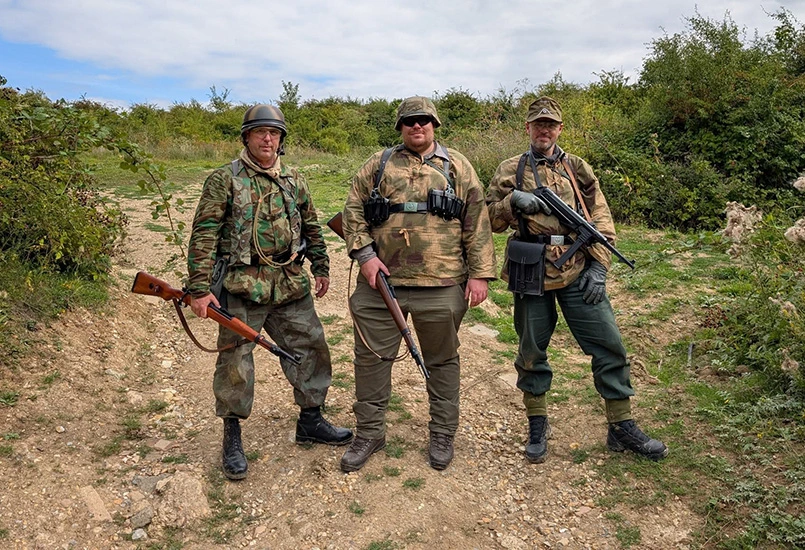
I learnt the 10 metre rule from playing Live Action Role Play (LARP) airsoft games, where costumes and props need to be convincing from a distance rather than up close. Whether I was playing as a WW2 solder, a US Seal in a Vietnam game, or a US Colonial Marine, it was the overall look that mattered most.
With some LARP games, but especially in reinactment circles you will find "Stitch-Counters". These are people who thrive on perfectionism and accuracy, often scrutinizing every detail up close. At one WW2 LARP event I was enthusicatially told by a stitch-counter that my uniform was incorrect because my tunic had 5 buttons instead of 7. To him, it was important. To me, not so much. And this was the birth of the 10 metre rule.
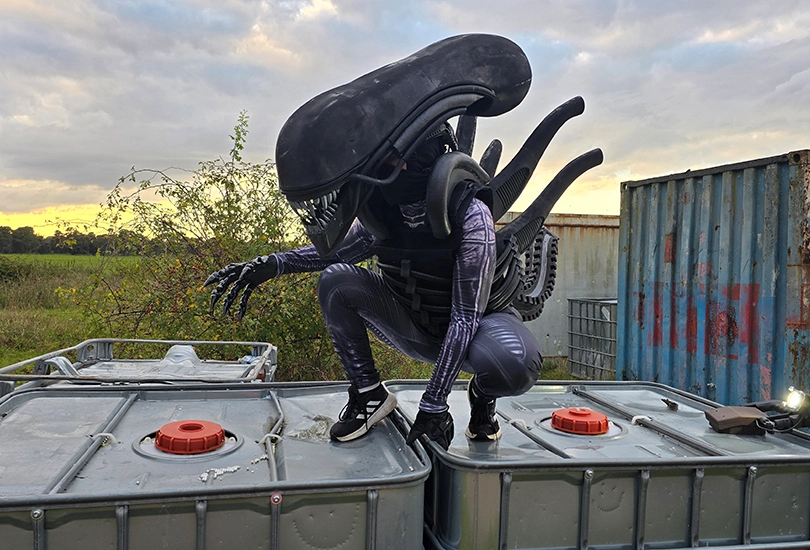
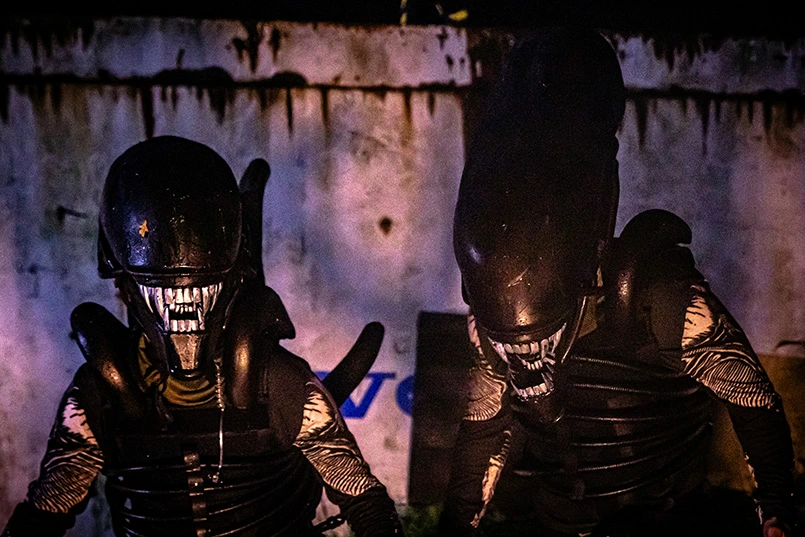
For a Halloween event, I created a pair of Alien Xenomorphs out of EVA foam. Each Xenomorph consisted of head, tail, back tubes, claws and a skin suit. In daylight and on close inspection, whilst they had the rough silhouette of a Xenomorph, it was very obviously there was someone dressed up in costume. Not scary in the slightest. I also made a wearable sound FX box and speaker for the Xenos. The night time came (They mostly come at night... mostly), play the hissing and growling sound FXs, and all the onlookers had the living daylights scared out of them! Everyone was totally convince they could have been real Aliens.
This was a good example of something that was silent and unconvincing during the day, turn down the light and add sound effects to create a convincing and very scary illusion.
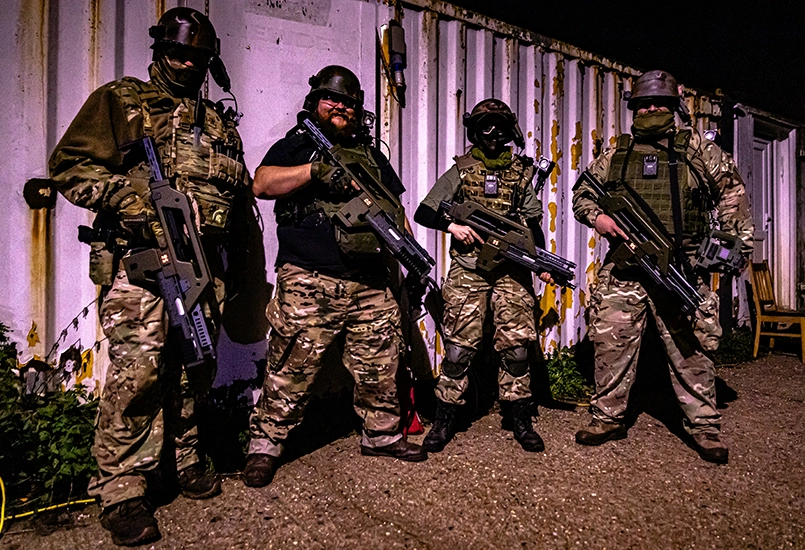
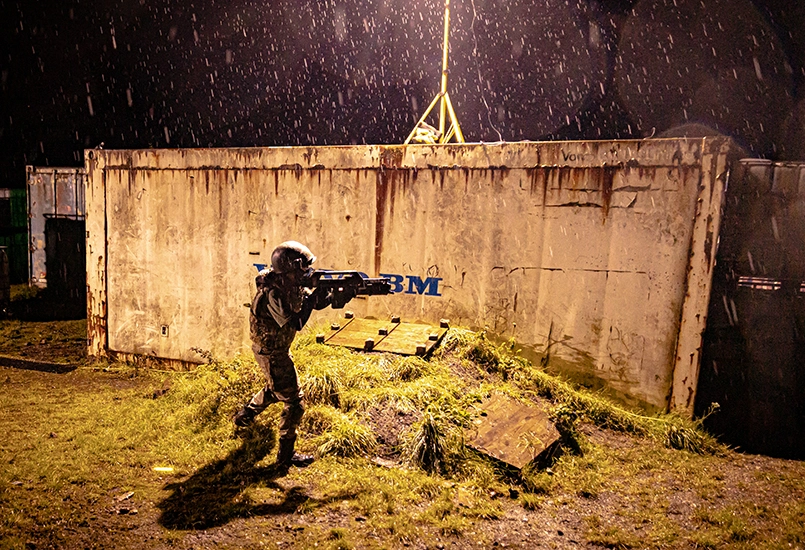
Another example is my US Colonial Marine loadout from the film Aliens. During the day and up close, there are many inaccuracies and compromises in the build. The body armour was a plain green airsoft plate carrier rather than the proper armour. The uniform camouflage pattern was wrong, being a modern multicam pattern rather than the actual true pattern. No leg braces. No patches. No accessories.
However, the weapons were accurate airsoft replicas of the M41A Pulse Rifles. The helmets had the bump, lobster plates, comms and dummy camera. They all had a working and accurate shoulder lamp. With just these three signature items and a night time evironment, the overall look is convincing enough to be instantly recognisable as a US Colonial Marine from Aliens.
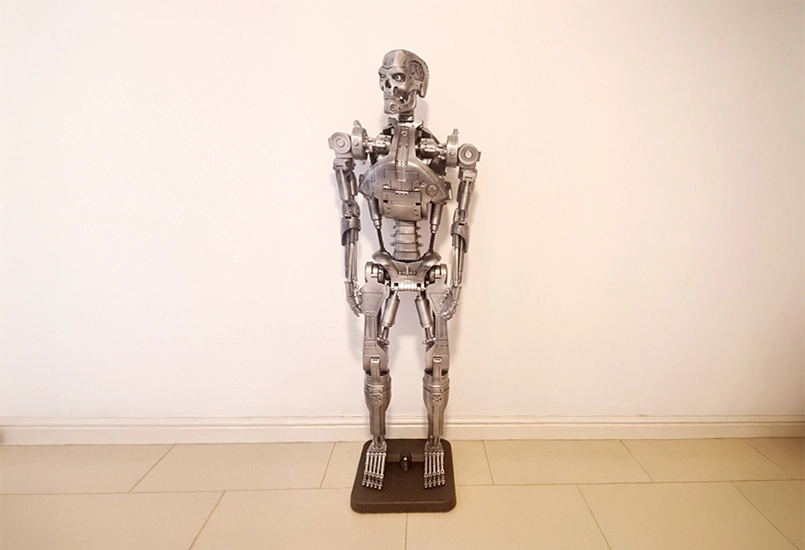
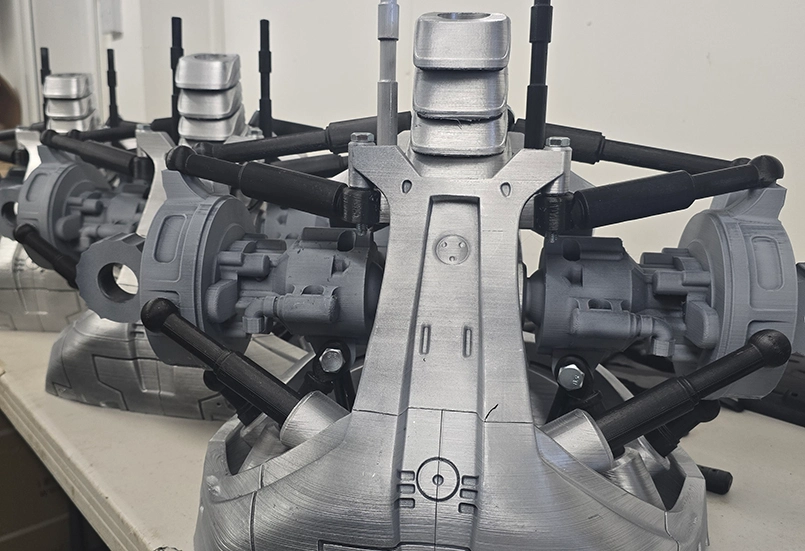
I 3D printed 3 full size T-800 Terminator Endoskeletons for a Halloween event. In daylight and on close inspection, it was clear they were 3D printed. The layer lines were very visible and the paint job just looked silver, not shiny chrome. However, step back 10 metres and the view was slightly different. At a distance they created a convincing and eerie illusion of the Terminator machines.
These are just a few examples of how the 10 metre rule can be applied to props and costumes to save time, money, and effort, whilst still achieving the same desired effect as if they had been build with perfection in mind.
When does the 10 metre rule not apply? If you are making something that needs closer inspection or will be viewed under bright lighting conditions, then the 10m rule may not apply. It is a judgement call as to whether you feel going the extra mile on detail and accuracy is necessary. More often than not the "that looks real" on first glance is a good measure of success.
So it's worth asking yourself - does it need to be perfect, or just good enough from 10 metres away?